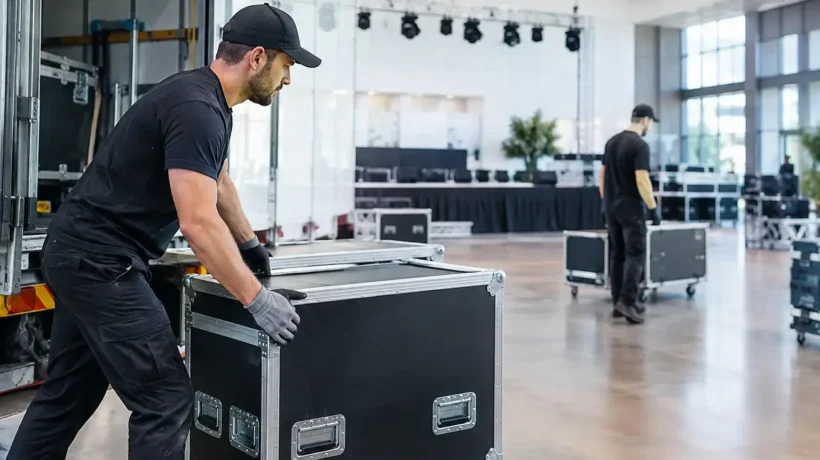
A show floor can look calm while the loading dock is making or breaking the entire event. Venue loading procedures determine whether your exhibit team begins installation with the right materials, adequate time, and a clear path to the booth space – or spends the first critical hours locating freight, resolving access issues, and paying for avoidable labor delays.
For exhibitors, the dock is not a back-of-house detail. It is the first operational expression of the brand experience you are about to create. A striking environment still has to arrive, move safely through the facility, and be installed in the sequence its design requires. Planning for those realities protects the budget, the schedule, and the quality of the final presentation.
Why Venue Loading Procedures Deserve Early Attention
Every venue has its own operating rules. One convention center may require advance dock appointments and marshaling-yard check-in. Another may allow deliveries only through a designated service entrance, with strict vehicle-height limits and narrow delivery windows. A hotel ballroom might have limited freight elevator access, carpeted routes, and loading windows shared by several events.
These rules affect more than transportation. They influence the exhibit design, the order in which crates are packed, the labor plan, the amount of equipment needed, and the time required for installation. A double-deck structure, large hanging sign, custom retail fixture, or oversized graphic wall has different access requirements than a tabletop display or modular rental exhibit.
The earlier those requirements are identified, the more choices remain available. A team can revise crate dimensions, reserve labor, book an appropriate carrier, or change the installation sequence before the event timeline becomes inflexible. Waiting until freight is in transit usually turns a manageable detail into an expensive exception.
Start With the Venue’s Operational Facts
The event organizer, general service contractor, and venue each may publish separate information. Read all three. The exhibitor service kit often addresses move-in dates, material handling, labor rules, and freight deadlines. The venue may provide additional guidance on loading docks, elevators, security, fire safety, parking, and building access.
The practical question is not simply, “When can we load in?” It is, “What must happen before our crew can begin installing?” That answer may include checking in at a marshaling yard, receiving a dock assignment, presenting a certificate of insurance, completing security screening, or obtaining wristbands and vehicle credentials.
Confirm the dimensions of every constrained route, including dock doors, freight elevators, corridors, escalators if relevant, and the path into the event space. Measure the largest crate, case, fixture, and rolling component against those constraints. Also account for turning clearance. An item that fits through a doorway may still be impossible to maneuver around a tight corner.
Vehicle restrictions matter just as much. Some urban venues cannot accommodate large trailers at certain times. Others prohibit overnight parking, limit idling, or require vehicles to leave the dock immediately after unloading. If a carrier arrives in the wrong vehicle or misses its assigned window, the team may face wait times, rehandling, or missed installation opportunities.
Build a Single Working Plan
A reliable loading plan gives every partner the same version of the truth. It should identify arrival times, contacts, freight tracking, vehicle details, dock procedures, equipment needs, labor calls, and the installation sequence. It should also note what cannot be installed until another element is in place.
For example, flooring may need to be laid before walls are built, while electrical and network connections may need to be confirmed before enclosed storage is completed. Graphics can be the final visual layer, but only if their crates are accessible when the installation team needs them. Packing and labeling should reflect this sequence, not just the order in which components happened to be manufactured.
A short planning call between the exhibit provider, carrier, event manager, and on-site lead can prevent a surprising amount of friction. It is especially valuable when several vendors are involved, such as audiovisual, technology, floral, product sampling, or furniture partners.
Make Freight and Material Handling Work Together
Freight delivery and material handling are related, but they are not always the same service. A carrier gets your shipment to the advance warehouse or venue. Material handling covers the movement of that freight from the dock or warehouse to the booth, and sometimes its return after the event. Rates, rules, and responsibilities vary by show.
Direct-to-show-site delivery can make sense for items that need to arrive close to installation, especially when timing is controlled and the crew is ready. Advance warehouse delivery can reduce uncertainty because freight is received before move-in begins and delivered to the booth when the show contractor schedules it. Neither option is automatically better. The right choice depends on the event schedule, the value and complexity of the materials, storage needs, and the consequences of a late arrival.
Label every piece clearly with the event name, booth number, destination, recipient contact, and piece count. “1 of 8” is more useful than a generic label when a crew needs a particular crate first. Keep a digital packing list available to the on-site lead, including photographs of unusual cases or components. That small step helps identify missing freight quickly and prevents a valuable crate from being mistaken for empty packaging.
Do not assume empty crates can remain nearby during the event. Most venues and contractors move them to storage, and retrieving an item from stored empties may involve time and cost. Pack booth essentials, spare graphics, cleaning supplies, literature, tools, and personal protective equipment in cases designated to stay in the booth or approved storage area.
Labor, Safety, and Access Are Part of the Creative Outcome
A physical environment is built by people working within a defined set of venue conditions. Labor rules may require union crews for material handling, electrical work, rigging, plumbing, or certain installation tasks. Some events permit exhibitor-appointed installation and dismantle teams under specific conditions; others do not. Clarify the rules before assigning responsibilities or promising an installation schedule.
The goal is not to add complexity. It is to use the right expertise at the right point. Electricians should be scheduled before walls obscure access to power locations. Rigging crews need approved plans and adequate lead time. Forklift operators, lifts, and pallet jacks should be reserved when the load and route require them, rather than requested after the dock becomes congested.
Safety procedures protect the schedule as well as the people on site. Establish who can authorize changes, where tools and materials will be staged, how aisles will remain clear, and when the team will pause work for inspections or overhead activity. If an installation changes from the approved plan, document it and confirm that it remains compliant with venue and event requirements.
A polished exhibit should never depend on rushing a crew through a restricted dock or asking someone to improvise around an unsafe condition. Good event management creates the room to do excellent work without gambling on access, labor availability, or last-minute approvals.
Use a Dock-Day Communication Rhythm
Loading days are dynamic. Traffic, weather, delayed carriers, security lines, and previous exhibitors can all affect the plan. The answer is not constant messaging from everyone. It is one clear communication rhythm with defined decision-makers.
Before move-in, confirm the on-site lead, backup contact, carrier dispatcher, project manager, and any contractor contacts. During delivery, the on-site lead should know when the vehicle checks in, receives a dock assignment, reaches the booth, and is released. If timing changes, communicate the impact early enough to adjust labor calls or installation priorities.
A useful dock-day checklist includes these five items:
- Vehicle arrival and check-in status
- Freight receipt and piece-count verification
- Booth delivery timing and crate priority
- Labor, equipment, and access readiness
- Exceptions requiring a decision or documentation
This is not about adding bureaucracy to an already busy day. It is about giving the team a fast way to distinguish a normal delay from an issue that could affect opening readiness.
Plan the Return Trip Before the Show Opens
Dismantle often carries more pressure than installation. The show has ended, attendees are leaving, labor windows may be short, and multiple exhibitors are trying to access the same dock. A return plan should be prepared before the opening day, not assembled after the final attendee exits.
Confirm outbound shipping documents, carrier pickup instructions, target pickup date, and any special packing requirements. Decide who is responsible for supervising repacking, applying labels, and releasing freight. Photograph high-value assets before they are crated, particularly if they will return to storage or travel to another event.
For organizations with recurring programs, asset management adds another level of control. Knowing what has returned, what needs repair, what can be reused, and what should be refreshed helps turn one event’s operational knowledge into a stronger next appearance. FrontLine Exhibits approaches this work as part of the larger brand program, because the details behind the wall matter just as much as the message in front of it.
The best loading plan gives your team freedom where it counts: more time to refine the environment, prepare the staff, and welcome the right conversations. When dock access, freight, labor, and communication are handled with intention, your brand arrives ready to be seen.