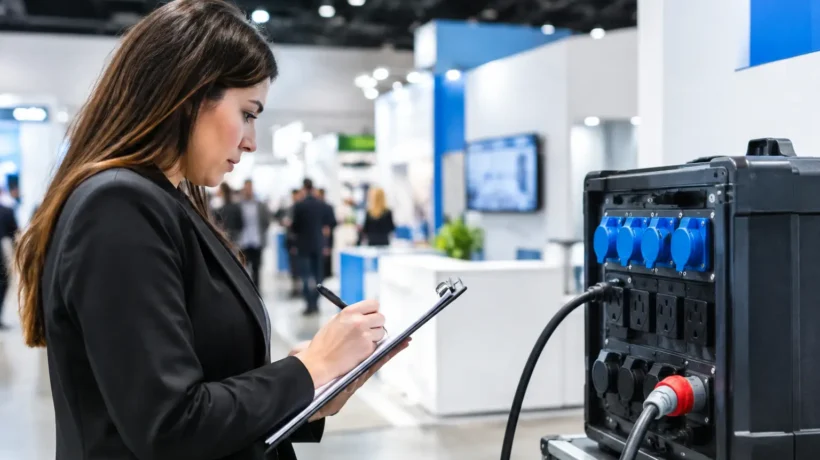
A polished exhibit can lose momentum fast when a monitor goes dark, a demo station trips a circuit, or a power drop lands on the wrong side of a reception counter. Learning how to plan booth power is not a minor production task. It is a design, budget, and attendee-experience decision that affects whether your space works as confidently as it looks.
For event teams already balancing booth design, shipping, staffing, lead capture, and promotion, electrical planning can feel like a detail to handle later. In reality, it belongs near the beginning. Power requirements influence the floor plan, the exhibit build, the venue order deadline, and the cost of your program. A little early coordination prevents rushed changes when the show floor is already open.
Start Booth Power Planning With the Experience
Begin with what visitors will see, touch, and use in the space. List every item that requires electricity, including items that may seem incidental: displays, laptops, tablets, charging stations, LED lighting, refrigerated product, coffee equipment, lead retrieval devices, branded lightboxes, and product demonstrations.
Then ask how each element supports the conversation you want to create. A large video wall may be central to your brand presence. A small charging counter may keep attendees in the booth longer. A live product demo may be the strongest proof point for your sales team. This distinction helps you protect the power needs that matter most when budgets or venue options create trade-offs.
Power planning should also account for operational needs, not only visual features. Where will staff charge devices? Does a presentation station need power throughout move-in? Will a display run during extended show hours or after-hours events? A well-designed environment makes these needs feel invisible to visitors, but that requires deliberate planning behind the scenes.
Build an Accurate Equipment List
The simplest way to avoid under-ordering is to create one working equipment list shared by the exhibit team, AV partner, and event manager. For every powered item, record the device name, quantity, wattage or amperage, voltage requirement, location in the booth, and whether it must operate continuously.
Most standard U.S. exhibit devices use 120-volt power, but do not assume every item does. Specialty equipment, commercial appliances, large LED installations, and certain demonstrations may require different voltage or dedicated service. The venue’s electrical contractor should confirm the service type before orders are submitted.
When a label provides watts, a basic planning calculation is watts divided by volts equals amps. For example, a 600-watt device on a 120-volt circuit uses approximately 5 amps. If a device lists amps, use that number directly. The goal is not to replace a qualified electrician or venue provider. It is to give your event team a reliable starting point and prevent several seemingly small devices from being assigned to one undersized circuit.
Use manufacturer specifications rather than estimates whenever possible. Screens, computers, and lighting often draw less power during normal use than their maximum rating suggests, but planning around a vague assumption is risky. For high-value demonstrations and critical AV, confirm the actual operating demand with the supplier and follow venue requirements.
Identify the Equipment That Changes the Plan
Some booth elements deserve special attention because they can dramatically increase electrical needs or require dedicated circuits. These include LED walls, high-output lighting, refrigeration, cooking or food-service equipment, machinery, interactive demos, and multi-screen presentation systems.
A single coffee maker or refrigerator can change the order more than a row of tablets. So can a high-resolution LED display that was added after the original exhibit concept was approved. Treat late-stage additions as power changes, not just creative upgrades. They may affect service size, outlet placement, labor, and cable management.
Match the Power Order to the Floor Plan
Knowing how much power you need is only half the job. You also need it in the right place.
Review the exhibit floor plan and mark the location of every outlet, electrical drop, and device. Consider where cords will travel, where furniture will sit, how doors and storage areas operate, and where visitors will stand. An outlet placed behind a graphic wall may be ideal for a monitor but useless for a reception counter on the opposite side of the booth.
For islands and larger inline exhibits, this coordination is especially important. Power may need to come up through the floor at specific points, route through the structure, or feed a raised floor system. If your booth includes enclosed rooms, product kiosks, or overhead elements, confirm that the exhibit design accommodates wiring before fabrication begins.
The cleanest solution is rarely the one that relies on long extension cords after installation. Visible cords distract from the brand environment and can create trip hazards, access problems, or venue compliance issues. Plan cable paths as carefully as sightlines. The attendee should notice the story, graphics, and conversation – not the infrastructure making it possible.
Order Early and Read the Venue Rules
Most trade shows use an official electrical provider, and early ordering usually matters. Advance rates are commonly lower than on-site rates, while deadlines can arrive well before freight move-in. Late orders may cost more, offer fewer placement options, or require additional coordination during an already compressed installation schedule.
Read the exhibitor service kit closely. It will explain available electrical services, pricing, ordering deadlines, outlet locations, labor rules, and restrictions on power strips, extension cords, or self-installed wiring. Requirements differ by venue and event. A solution that worked at one convention center may not be permitted at the next.
Clarify whether your order covers continuous power or power only during published show hours. Some equipment, such as refrigeration, requires overnight service. Other devices should be powered down each evening for energy management, equipment protection, or venue policy. This is a small line item until it becomes the reason a product display fails the next morning.
Separate Critical Power From Convenience Power
Not every device carries the same business risk. A charging station can be temporarily unavailable without ending your event. A live demo, lead capture station, or main presentation screen may not have that flexibility.
Identify critical equipment early and, where appropriate, place it on dedicated service rather than sharing a circuit with convenience items. This approach can cost more, but it reduces the chance that staff plugging in personal chargers or an added device will interrupt your primary attendee experience.
It also helps to build a simple hierarchy. First protect the equipment that supports selling and demonstration. Next support the brand elements that create visibility. Then account for staff comfort and secondary conveniences. This makes trade-offs easier if the final electrical estimate exceeds the budget.
Budget for Power as Part of the Exhibit, Not an Add-On
Power is often underestimated because it appears as a service order rather than a physical exhibit component. Yet its cost can include advance electrical service, floor distribution, special connections, labor, overnight power, and any changes required when the exhibit layout shifts.
Build a power allowance into the event budget when the concept is being developed. This gives the creative team room to recommend meaningful features without presenting an unexpected expense after approvals are complete. It also creates a more honest comparison between exhibit options. A dramatic media feature may be worth the cost, but the decision should reflect its full operational footprint.
For multi-show programs, keep records of what was ordered, what was actually used, and where issues occurred. That history becomes a valuable planning asset. A managed exhibit program can turn each show into useful intelligence rather than another round of starting from scratch.
Test Before Attendees Arrive
Move-in is the moment to verify, not merely hope. Once electrical service is active, test every powered element under normal operating conditions. Run presentations, activate lighting, charge devices, check refrigerators, and confirm that demo equipment works as expected.
Make sure the team knows where circuits, outlets, and any venue service contacts are located. Label power connections inside storage areas or behind counters when appropriate, especially if multiple vendors are involved. A few minutes of organized testing can protect hours of selling time.
If something is wrong, report it immediately through the venue’s established process. Do not improvise with unapproved adapters, overloaded strips, or wiring that bypasses venue rules. The fastest-looking fix can create a safety issue, a compliance problem, or a much larger interruption.
Plan Power as Part of the Brand Experience
Booth power is infrastructure, but it shapes the experience your audience has with the brand. It determines whether a product demo feels credible, whether a conversation can happen without interruption, and whether your team can stay focused on prospects instead of troubleshooting equipment.
At FrontLine Exhibits, Strategically Applied Imagination means pairing ambitious physical concepts with the practical details that let them perform under real event conditions. Bring power planning into the early exhibit conversation, and your team will have more freedom to create a presence that feels considered, capable, and ready when the doors open.