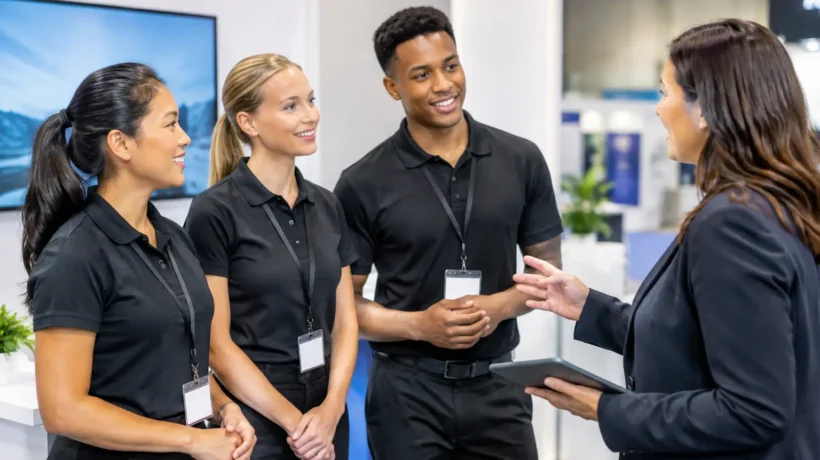
A striking exhibit can stop traffic, but it cannot carry a sales conversation on its own. When prospects approach the booth, the people representing your brand determine whether that investment becomes a meaningful opportunity or a missed moment. Effective event staff training gives those people the confidence, direction, and shared standards to make every interaction count.
For B2B organizations, trade shows and marketing events are high-visibility commitments. Floor space, travel, shipping, graphics, technology, and staff time add up quickly. Training is what connects those moving parts to the outcomes leadership expects: stronger awareness, better-qualified leads, productive sales conversations, and a brand presence people remember for the right reasons.
Why Event Staff Training Protects Your Investment
An exhibit is designed to create a physical expression of your brand. Its architecture, graphics, demonstrations, and hospitality areas should support a clear objective. Yet even the most carefully built environment can feel disconnected if staff members deliver mixed messages, focus only on familiar contacts, or wait passively for attendees to initiate a conversation.
Training creates alignment before the show floor opens. It clarifies what the team is there to accomplish, who they should engage, what they should communicate, and how information should move from the booth to the sales follow-up process. That alignment makes the experience feel intentional to visitors while reducing uncertainty for the people working the event.
This does not mean turning staff into scripted presenters. In fact, overly rigid scripts often create awkward interactions. The goal is to give each person a confident framework: a shared opening, a clear understanding of priority audiences, approved messaging, and the freedom to listen and respond naturally.
Start With the Outcome, Not the Talking Points
The strongest training sessions begin with a practical question: what must this event produce for the business? The answer may be qualified leads for a sales team, meetings with current customers, product feedback, partner conversations, media visibility, or education around a new offering. A team cannot prioritize effectively when every interaction is treated as equally valuable.
Define a small number of measurable goals and explain how each role contributes. A product specialist may be responsible for demonstrations. A sales leader may handle high-value meetings. A greeter may identify visitor needs and direct conversations to the right person. Operations staff may protect the experience by keeping materials stocked, presentation technology ready, and the space welcoming.
When roles are clear, staff members do not compete for attention or leave promising visitors standing alone. They can move with purpose through the environment, knowing when to begin a conversation, when to bring in an expert, and when to capture details for follow-up.
Build Messaging Around Real Visitor Questions
Staff need more than a company overview. They need language that speaks to the concerns attendees bring to the floor. A marketing director may want to know whether your solution improves campaign performance. An operations leader may be focused on implementation requirements. A business owner may be weighing cost, risk, and speed.
Prepare a concise value statement, then develop a few supporting points for the most common audience types. Keep the language clear enough that everyone can use it without sounding rehearsed. Product claims, pricing boundaries, competitive comparisons, and compliance-sensitive topics should be addressed directly so the team knows where to be precise and when to involve a subject-matter expert.
A useful exercise is to ask staff to practice answering three questions: What do you do? Why should this visitor care? What is the best next step? If answers vary widely, the message needs more work before the event.
Train for the First 30 Seconds
The opening moments of a booth interaction shape everything that follows. Visitors are moving quickly, scanning for relevance, and deciding whether to stay. Staff should understand how to be welcoming without becoming overly aggressive.
Rather than relying on generic greetings, train the team to use observations and questions that invite a real response. A visitor looking at a product display may respond well to a question about their current process or a relevant challenge. Someone studying event graphics may be interested in the specific application featured. The point is not to force a pitch. It is to earn permission for a conversation.
Body language matters just as much. Staff should avoid forming closed circles with coworkers, looking down at phones, eating in the booth, or standing with crossed arms at the entrance. They should also avoid crowding attendees. A relaxed, attentive posture and awareness of the entire space create an approachable presence.
This is where rehearsal is particularly valuable. Role-play can feel uncomfortable at first, but it reveals habits that a slide presentation will not. Practice common situations: the rushed attendee, the curious student, the current client, the competitor, the prospect who wants a technical answer, and the visitor who is not a fit. Each scenario helps staff respond with composure instead of improvising under pressure.
Make Lead Capture a Conversation, Not a Chore
Many event programs lose value after the show because lead details are incomplete, inconsistent, or impossible to interpret. A badge scan alone rarely tells the sales team why someone stopped by, what they need, or how quickly they expect a response.
Training should establish a simple lead qualification standard. Staff need to know which details matter most, such as role, company, business challenge, buying timeline, product interest, and agreed next step. The standard should match the organization’s sales process. Asking for every possible detail can slow down a busy booth, while collecting too little leaves follow-up teams guessing.
The best approach depends on traffic volume. At a high-volume show, staff may need a fast triage process with brief notes and a clear category for priority leads. At a smaller, relationship-focused event, longer conversations and detailed notes may be appropriate. In either case, train everyone on the lead technology before arriving onsite. A scanner, tablet, or event app is only useful if staff can use it quickly and consistently.
Set expectations for lead handoffs, too. If a visitor asks for a proposal, requests a meeting, or needs a product expert, staff should know exactly who owns the next move. That clarity prevents valuable conversations from disappearing into a general post-show list.
Prepare for the Operational Details Visitors Notice
Event staff are part of the environment, not separate from it. They need to understand the exhibit layout, presentation schedule, storage locations, demonstration reset procedures, and the daily plan for breaks. These details may seem small, but they shape whether the booth feels polished during the busiest hours.
A pre-show walkthrough is one of the most effective ways to connect training with the actual space. Have staff enter the exhibit as an attendee would. Review sightlines, conversation zones, product displays, lead capture points, and places where traffic could bottleneck. Let presenters test technology and practice transitions between demonstrations.
For complex programs, a short onsite huddle each morning keeps the team coordinated. Review the day’s priorities, scheduled meetings, key messages, staffing coverage, and any lessons from the previous day. FrontLine Exhibits often sees that this operational rhythm is what allows a creative environment to perform as a reliable business tool.
A Training Plan That Fits the Event
Not every program needs the same level of preparation. A small regional event with two experienced representatives may require a focused briefing and message review. A major trade show with a large team, a custom exhibit, demonstrations, and several audience types requires more structure.
For most teams, training works best in four stages:
- Pre-event alignment: Confirm goals, audience priorities, roles, messaging, and lead definitions several weeks before the show.
- Interactive practice: Use role-play, objection handling, and product demonstrations to strengthen confidence and expose gaps.
- Onsite orientation: Walk the exhibit, test tools, review schedules, and establish procedures for issues or escalations.
- Daily refinement: Use quick huddles to improve based on attendee reactions, traffic patterns, and lead quality.
This process does require staff time, which can feel difficult to protect during a compressed event timeline. But skipping it often shifts the cost to the show floor, where inconsistent conversations and weak lead data are far more expensive.
Measure What Training Changed
Event performance should not be judged only by total scans or foot traffic. Look at lead quality, meetings booked, demonstration participation, sales feedback, follow-up completion, and the consistency of notes captured. Ask staff what questions they heard repeatedly and where they felt unprepared. Those insights can improve both the next training session and the exhibit itself.
The goal is not a flawless script or a booth full of perfect presenters. It is a capable team that can represent the brand with energy, judgment, and genuine attention to the people in front of them. When your staff understands the strategy behind the space, the exhibit becomes more than a destination on the show floor. It becomes a place where the right conversations are ready to happen.