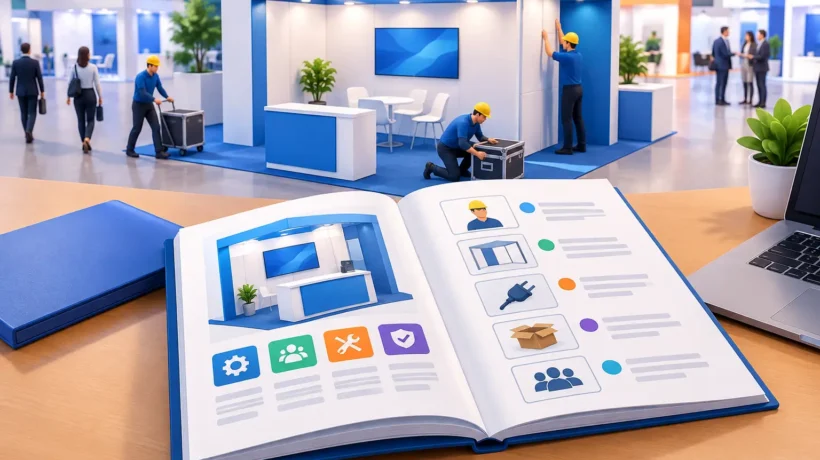
The exhibit concept may be approved, the graphics may be in production, and the sales team may be ready to work the floor. Then the exhibitor service manual arrives. For many teams, exhibitor service manuals feel like dense administrative paperwork. In reality, they are the operating instructions for protecting your investment, your timeline, and the brand presence your audience will experience on-site.
A well-designed exhibit can still lose impact when power is ordered late, freight misses a targeted move-in window, or a venue restriction changes the installation plan. Reading the manual with the same attention given to booth design turns those risks into managed decisions rather than expensive surprises.
What Exhibitor Service Manuals Actually Control
An exhibitor service manual is the event organizer’s guide to exhibiting at a specific show. It typically combines rules from the venue, general contractor, labor provider, freight carrier, electrical supplier, internet provider, and show management team. Its details determine much more than where to submit forms.
The manual establishes dates for advance-rate ordering, freight receiving, move-in and move-out, and any required insurance or approval documents. It identifies the services available on the show floor and the providers authorized to deliver them. It also spells out restrictions that affect the physical environment itself, including height limits, hanging-sign requirements, fire and safety standards, floor-loading limits, aisle access, and rules for demonstrations or food service.
This is why a manual should not be treated as a task for the final weeks before the event. It is a project document that influences budget, exhibit engineering, staffing, shipping, and the visitor experience from the beginning.
Start With the Dates That Change the Budget
The first useful pass through a service manual is not a full read from page one to the end. Begin with the calendar and the order forms. Advance deadlines matter because essential services can cost substantially more after discount dates pass. Freight, material handling, electrical service, labor, internet, cleaning, furnishings, and lead retrieval all deserve early attention.
The least expensive option is not automatically the right one. A reduced shipping rate, for example, may require sending materials to an advance warehouse well before your internal team is ready. Direct-to-show shipping may better fit a compressed production schedule, but it can bring greater timing risk. The right choice depends on production readiness, the value of the shipment, show location, and how much on-site flexibility the team needs.
Set a single internal deadline that falls before the show’s published advance-rate date. That buffer gives the team time to verify quantities, gather approvals, and resolve questions before a missed form becomes a rush charge. It also prevents multiple departments from placing overlapping orders because each person assumed someone else was handling power, flooring, or internet.
Assign ownership, not just reminders
A deadline tracker is helpful, but it needs an owner behind every line. Marketing may approve visual choices, while operations confirms shipping details and finance approves higher-cost services. Assign one event lead to maintain the complete view, with clear owners for each submission and a record of confirmation numbers.
This approach matters most when several vendors are involved. A custom exhibit fabricator, rental provider, graphics partner, freight carrier, and internal event team can all be working toward the same opening day. Without a coordinated review of the manual, an otherwise capable group can make incompatible assumptions.
Use the Manual to Test the Exhibit Plan
The most effective exhibit environments are tailored to the event objective and the practical conditions of the floor. The service manual helps test whether the planned environment can be built, powered, staffed, and operated as intended.
Start with the floor plan and exhibit regulations. Confirm the exact booth dimensions, neighboring booth conditions, height allowances, and sightline rules. An open corner may invite a welcoming presentation area, while a peninsula or island space creates different opportunities and approval requirements. If a large backlit wall, overhead structure, product display, or private meeting area is part of the concept, review the relevant restrictions before finalizing production.
Power and connectivity deserve the same level of attention. A monitor wall, product demo, hospitality station, or charging counter changes the electrical load and outlet placement required. Ordering one outlet because it appears less expensive can create a visible cable-management problem later. Similarly, shared venue Wi-Fi may be adequate for email, but it may not support reliable live demos, video calls, or lead capture at a busy show.
Think through the attendee experience in physical terms. Where will visitors enter? Where will staff stand? Can a conversation happen without blocking access to a demo or storage area? The manual cannot answer every strategic question, but it gives the operational boundaries within which strong ideas can perform.
Protect the Plan From Freight and Labor Surprises
Material handling is often misunderstood because it is not simply a shipping charge. The general contractor may charge to receive, move, store, and deliver freight to the booth, often based on shipment weight and timing. Shipments sent to the advance warehouse and shipments delivered directly to the venue can follow different pricing and procedures.
Accurate weights, dimensions, labels, and shipping paperwork are essential. A crate with incomplete labels can be harder to locate during move-in, while an underestimated shipment can disrupt both budget and installation sequencing. For reusable exhibit assets, maintain an inventory that identifies each crate’s contents, weight, and destination. That level of discipline makes future events easier to manage as well.
Labor rules require equally close attention. Some venues permit exhibitor staff to assemble simple elements, while others require union labor for work such as electrical connections, material handling, rigging, or more extensive installation. Review minimum call times, overtime windows, and supervision requirements before building a labor schedule. A plan that calls for a late-afternoon install may be far more expensive than one completed during standard hours.
A managed-services partner can coordinate these details, but the exhibitor still benefits from understanding the decisions. Clear visibility helps leadership make smart trade-offs when schedules tighten or scope changes.
Look Beyond the Booth Structure
The manual often contains requirements that are easy to overlook because they are not directly connected to the exhibit build. Required certificates of insurance, vehicle access procedures, parking rules, security hours, badge registration, cleaning orders, and move-out instructions can all affect the event team’s workload.
Move-out deserves special attention. At the end of a long show, booth staff are focused on leads and travel plans, while the exhibit still needs to be packed, labeled, and released to the correct carrier. Confirm the bill of lading process, carrier check-in requirements, targeted freight deadlines, and who has authority to sign paperwork. A missed pickup can lead to forced freight or additional handling costs.
For teams exhibiting across multiple cities, these details are a strong argument for asset management. Keeping graphics, crates, furniture, hardware, and documentation organized between events reduces repetitive decisions and limits the risk of sending the wrong component to the wrong show.
Turn the Manual Into a Working Event Plan
The goal is not to memorize every page. The goal is to translate the manual into a practical project plan that supports the larger campaign. At FrontLine Exhibits, that means connecting requirements to the intended brand experience, rather than treating compliance and creativity as separate workstreams.
Create a concise event brief from the manual that captures the critical dates, ordered services, freight plan, labor schedule, show contacts, emergency numbers, booth rules, and move-out instructions. Share it with everyone who has a role in the event, including booth staff when their actions affect setup, demonstrations, or breakdown.
Then conduct one final review shortly before shipping. Compare the approved exhibit drawings and order confirmations with the current manual, especially if show management has issued updates. Confirm that booth number, delivery address, electrical locations, internet needs, and installation timing all align. This is also the right moment to ensure the on-site team knows what success looks like: qualified conversations, product demonstrations, meetings, leads, or a more visible market presence.
A Better Manual Review Creates More Room for Presence
Trade show complexity is not a distraction from brand-building. Managed well, it creates the conditions for it. When freight, labor, services, and venue requirements are resolved early, the team can give its attention to the people walking into the space instead of the problems waiting behind the curtain.
Treat the service manual as an early design and operations conversation. The result is not merely a compliant booth. It is a more confident, more intentional physical presence that has room to do the work it was built to do.