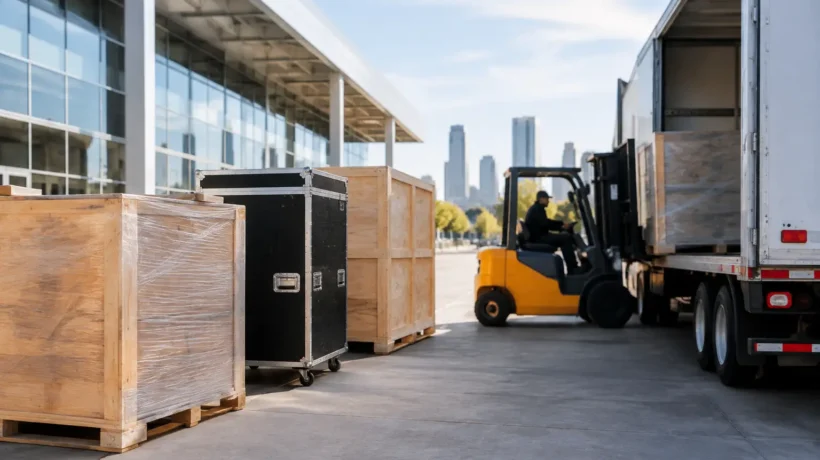
A beautiful exhibit can lose its impact before the show floor opens if it arrives late, arrives damaged, or gets caught in avoidable material-handling charges. Exhibit freight options are not simply a transportation decision. They shape your installation schedule, labor requirements, budget certainty, and ability to put your team in front of attendees with confidence.
For event managers and marketing leaders, the right choice depends on more than the lowest shipping quote. Venue rules, target dates, the size and fragility of the display, whether you need items available for early setup, and your tolerance for risk all matter. The strongest freight plan protects the creative investment in your exhibit while making the operational side of the event easier to manage.
How exhibit freight options affect the entire event plan
Freight is often treated as a final task after the exhibit is designed and the event is booked. In practice, it should be considered much earlier. A custom environment with large crated components, LED walls, specialty flooring, or sensitive graphics may need a different transportation and delivery approach than a compact rental display with a few cases.
The destination also changes the decision. Convention centers, hotels, outdoor venues, and corporate campuses each have their own receiving procedures, dock access, delivery windows, and labor rules. A plan that works well for a standard trade show may create unnecessary expense at a hotel ballroom or a retail installation.
When freight is planned alongside design, production, and installation, the exhibit can be built around real-world requirements. That may mean designing modular components for more efficient packing, choosing cases that double as counters, or preparing a staging plan that keeps the install crew moving instead of searching for misplaced parts.
The primary exhibit freight options
Most exhibiting programs rely on one of three delivery paths: advance warehouse shipping, direct-to-show shipping, or dedicated and expedited transportation. Each has a clear purpose, along with trade-offs that should be understood before a bill of lading is created.
Advance warehouse shipping
With advance warehouse shipping, exhibit materials are delivered to the official show contractor’s warehouse weeks before the event. The contractor stores the shipment, then delivers it to the booth space during move-in.
This option is often the most forgiving choice for teams that want to reduce deadline pressure. Your display is already in the event system before the hectic final days of travel and setup. It can be especially useful when installation begins early, when a booth includes several crates, or when internal teams do not have the bandwidth to closely monitor a narrow delivery window.
The trade-off is that advance warehouse shipments may involve receiving, storage, and transfer costs. Materials are also handled more than once, so durable crating and clear labels are essential. If your shipment contains items needed for a pre-show meeting or press event, confirm when the contractor can release them. Warehouse delivery provides certainty, but it does not automatically mean immediate access.
Direct-to-show shipping
Direct-to-show freight is delivered to the venue during the official move-in period. It can reduce storage time and may be a practical choice for exhibits that are produced close to the event date or need to remain in use until shortly before the show.
The risk is timing. Convention center docks can become congested, and a carrier that misses its assigned delivery window may face delays, waiting time, or a refused delivery. Your team may also be waiting for key exhibit components while other exhibitors are already installing.
Direct-to-show can work very well when the carrier understands trade show procedures and the shipment is tightly coordinated with the event schedule. It is less attractive when a booth has a complex build, when deadlines are immovable, or when an exhibit needs to be ready before general contractor freight begins arriving on the floor.
Dedicated, expedited, or specialized transportation
For high-value, oversized, unusually fragile, or time-sensitive shipments, dedicated transportation can offer more control. A dedicated vehicle may carry only your assets, follow a planned route, and deliver within a carefully coordinated window. Expedited service can be valuable when production timelines compress or when a critical component must catch up to the rest of the display.
This approach typically costs more, but the higher rate can be justified by reduced handling and tighter accountability. A dedicated truck is often worth considering for a major product launch, a complex island exhibit, or a multi-stop event campaign where the same assets must move quickly between cities.
Specialized transportation may also be necessary for items with unique requirements, including temperature-sensitive products, oversized structures, battery-powered equipment, or materials subject to additional documentation. The best choice is not always a premium service. It is the service that matches the actual risk of the shipment and the value of being ready on time.
Choose based on risk, not just the freight quote
A low shipping rate can become expensive when accessorial charges, drayage, waiting time, re-delivery, or emergency labor are added later. When comparing exhibit freight options, ask for a complete view of the likely cost, including pickup requirements, fuel, liftgate needs, residential or limited-access charges, advance warehouse fees, material handling, and return shipping.
Then consider the cost of disruption. If one missing crate prevents the installation of a branded structure, demo station, or lead-capture area, the impact extends beyond a freight invoice. Sales conversations are delayed. The team loses setup time. The brand presence your audience expects is incomplete.
A practical planning question is this: what happens if this shipment is one day late? For a simple pop-up display, the answer may be manageable. For a custom environment with integrated graphics, technology, and product displays, it may change the entire event outcome. The more difficult the recovery, the more valuable advance receiving or dedicated transportation becomes.
Details that prevent costly freight problems
Good freight coordination turns on small details. Every crate, case, and pallet should have clear labels with the event name, booth number, destination, contact information, and piece count. Labels should remain visible after stacking and should match the bill of lading exactly.
Accurate dimensions and weights matter just as much. Estimates can lead to reclassification charges, equipment problems, or inadequate dock planning. If a crate requires special handling, note it before pickup rather than hoping the venue can adapt on arrival.
It also helps to create a shipment manifest that identifies what is inside each container. This gives the installation team a faster way to locate graphics, hardware, literature, technology, and spare parts. Keep essentials such as laptops, product samples, documents, and backup graphics with your traveling team whenever possible. Freight carriers are built to move large assets efficiently, not to replace the security of having mission-critical items in hand.
Outbound freight deserves the same attention as inbound delivery. Review the show’s dismantle schedule, confirm carrier pickup instructions, protect components before they leave the floor, and make sure the bill of lading is completed correctly. A rushed outbound process can create storage penalties, lost assets, or problems at the next event.
Build freight into a managed exhibit program
Organizations with active event calendars gain an advantage when freight becomes part of a broader asset-management plan. Standardized crates, current inventories, documented packing instructions, and known shipping profiles make it easier to forecast costs and repeat what works from event to event.
This is where a full-service exhibit partner can remove a significant administrative burden. FrontLine Exhibits can coordinate the moving parts around an exhibit program so the freight plan supports the larger objective: a polished, purposeful presence that is ready when your audience arrives.
The right freight decision is rarely about choosing one method forever. It is about matching the route, timing, assets, venue, and event stakes to a plan that gives your team room to focus on the conversations that happen once the doors open.