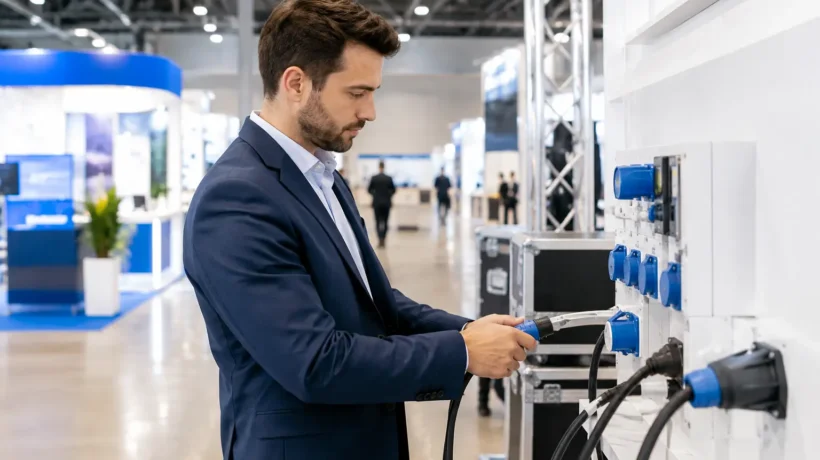
A show floor can look fully built and still fail its first real test: the moment screens stay dark, a product demo will not boot, or a lead-capture station loses power halfway through the day. This trade show electrical ordering guide helps exhibitors turn power from a last-minute utility purchase into a planned part of the exhibit experience.
Electrical service is not simply about finding an outlet. It affects booth layout, visitor flow, safety, labor, budget, and the reliability of every digital or illuminated element that carries your brand. The right plan gives your team a polished, working environment from opening bell to teardown.
Start With the Experience You Need to Power
Begin with the visitor journey, not the electrical order form. Identify what attendees need to see, touch, hear, and use inside the space. Video walls, monitors, tablets, illuminated graphics, product displays, refrigeration, coffee equipment, charging bars, and demo stations all have different requirements. A small power decision can change the design of an entire booth.
Create an equipment schedule early, ideally while the exhibit is still being designed. For each item, record its voltage, wattage or amperage, plug type, location, and how long it must operate. Include the less obvious pieces: routers, laptop power supplies, media players, battery chargers, task lighting, cashless payment equipment, and the power supplies hidden inside displays.
Do not assume a device is low-demand because it is physically small. A gaming workstation, commercial-grade monitor array, or appliance can require more capacity than expected. Conversely, modern LED lighting and many digital displays may draw less power than legacy equipment. The equipment specification, rather than a guess, should guide the order.
Understand watts, amps, and circuits
Most standard U.S. trade show power uses 120 volts. A practical planning formula is watts divided by volts equals amps. A 600-watt display wall, for example, draws roughly five amps at 120 volts. But that calculation is a starting point, not a final order.
Allow room for startup draw, continuous use, and additions that appear late in the planning process. Equipment that generates heat, contains motors, or has a compressor may need a dedicated circuit. Some larger exhibits need 208-volt or 240-volt service, specialty connections, or three-phase power. Those requirements should be confirmed with the equipment manufacturer and the event’s official electrical contractor well before the advance-order deadline.
It depends on the device mix. A simple 10-by-10 booth with one monitor and a laptop may be well served by a standard outlet. A larger environment with a demonstration kitchen, interactive technology, and layered lighting needs a more deliberate distribution plan. Ordering too little creates risk. Ordering far more than needed can consume budget that would be better used on visitor-facing elements.
Trade Show Electrical Ordering Guide: Match Power to the Floor Plan
Once you know what needs power, place each requirement on the booth floor plan. Do not order service only at the booth perimeter and hope extension cords will solve the rest. Power locations determine where cables travel, where furniture can sit, and whether a clean, open presentation is possible.
For example, a reception counter with lead retrieval and a charging point may need power directly beneath or behind it. A freestanding product kiosk needs service at its base. A video feature wall may require connections hidden within the structure. Mark each location clearly on the form using the venue’s grid system, then compare it against the final exhibit drawings.
This step prevents a common and expensive problem: power arrives in a visible walkway or under a finished floor where it cannot reach the equipment without rerouting cables onsite. Changes made after the service has been installed may require additional labor, new materials, and schedule flexibility that is hard to find during move-in.
If your exhibit includes raised flooring, built-in counters, or custom structures, coordinate cable paths before production begins. The exhibit team, electrician, and show contractor should work from the same plan. This is where strategic design and event operations need to operate as one discipline.
Plan for cable management, not just connection points
A power plan should protect both people and presentation. Loose cords can create trip hazards, block access, and make an otherwise refined booth look improvised. Cables may need to run beneath raised flooring, inside structural channels, behind storage walls, or under approved floor coverings.
Do not rely on consumer extension cords, power strips, or adapters as a substitute for venue service. Many shows regulate what can be used, how cords must be rated, and who may make electrical connections. The venue’s electrical contractor has final authority, particularly when service must be hardwired or distributed through the exhibit structure.
Order Early, Then Verify the Show Rules
Electrical forms are typically included in the exhibitor service kit. Read the details, including advance deadlines, floor-order rates, installation procedures, cancellation terms, and rules for bringing your own equipment. Advance pricing can be significantly lower than ordering after the deadline or on the show floor.
Early ordering also creates time to resolve questions. If a form’s terminology is unclear, ask whether the service is shared or dedicated, whether it is 24-hour power or daytime-only power, and whether installation labor is included. These distinctions matter. A standard outlet may be sufficient for a monitor that runs during exhibit hours, while refrigeration, servers, or equipment that must remain active overnight may require continuous service.
Be especially careful when comparing electrical packages. Two services with similar-looking names may differ in amperage, access, hours of operation, and the number of connection points. A lower initial price does not help if it requires a costly onsite upgrade or leaves a key demo offline.
Build Electrical Costs Into the Exhibit Budget
Power is often treated as a show-service line item that appears after the exhibit is designed. That approach can lead to unwelcome surprises, especially in large convention centers or cities with higher labor and service costs. Include electrical service in the working event budget from the beginning, along with drayage, installation and dismantle labor, internet, rigging, and material handling.
The cost is shaped by several factors: how much power is needed, how many locations require service, whether installation occurs before or after the booth is built, and whether specialized equipment is involved. Labor may also be required to connect power within a custom exhibit, install overhead lighting, or make changes after move-in.
For frequent exhibitors, standardizing technology packages can make forecasting easier. Using the same monitor types, lighting systems, and demo stations across multiple events creates a repeatable power profile. For occasional exhibitors using a rental, the design can be tailored around the equipment and service level needed for that event, avoiding the cost of overbuilding.
Test the System Before Attendees Arrive
When electrical service is live, conduct a deliberate walkthrough before the show opens. Confirm that every display powers on, demos run under normal conditions, lights are aimed correctly, devices can charge, and cables are secured. Test the full system at once rather than turning on one device at a time. That is how you identify an overloaded circuit or an overlooked connection before visitors arrive.
Assign one team member to know where the electrical order, booth plan, equipment list, and emergency contacts are kept. If something needs attention, that person can speak clearly with the service desk and electrician instead of losing valuable setup time reconstructing the request.
It is also wise to carry approved backups for the items under your control, such as extra charging cables, replacement adapters, and fully charged devices. These do not replace venue electrical service, but they can keep a small issue from interrupting an important conversation.
Make Power Part of the Brand Experience
The best electrical plan is nearly invisible to attendees. Screens activate when they should, lighting supports the product, demonstrations feel effortless, and staff can focus on conversations rather than troubleshooting. That reliability creates confidence in the brand behind the booth.
At FrontLine Exhibits, strategically applied imagination means pairing an ambitious physical concept with the operational details that make it perform. Electrical planning may not be the most visible part of an exhibit, but it is often what allows the most visible parts to work.
Before you submit the order, review the equipment schedule, floor plan, service deadlines, and setup responsibilities together. A few focused decisions made early can protect your budget, preserve your design intent, and give your team a space that is ready to make every live interaction count.