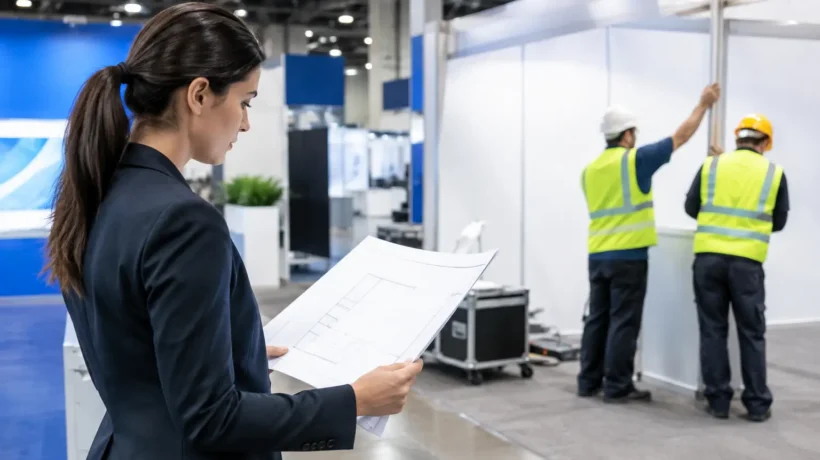
A beautiful exhibit can arrive on time, clear advance warehouse, and still lose momentum before the doors open if the labor plan is wrong. This trade show union labor guide helps exhibitors understand who does what, when union rules apply, and how to protect the schedule and budget behind a confident brand presence.
Union labor is not a complication to work around. At many major convention centers, it is the operating framework that helps move freight, install electrical service, rig signage, lay carpet, and build exhibits safely. The challenge is that the rules, rates, jurisdictions, and exhibitor allowances can change by venue and by show. Planning from assumptions is where avoidable costs begin.
What trade show union labor means for exhibitors
A union venue uses skilled labor managed through local unions, an official service contractor, or both. Depending on the facility and show agreement, exhibitors may need assigned labor for material handling, booth installation and dismantle, electrical work, plumbing, hanging signs, internet, and audiovisual services.
That does not mean your internal team cannot participate. Many shows allow exhibitor personnel to perform limited work inside their own booth, especially for portable displays that do not require tools, ladders, or freight-handling equipment. Other venues restrict even simple assembly. A booth that can be installed by your staff in one city may require union labor in the next.
The governing documents are the exhibitor service kit, the venue rules, and the show’s specific labor jurisdiction policies. Review them early, rather than relying on a prior event or a verbal answer from a colleague. The details affect everything from how your exhibit is packed to which day your crew should arrive.
The labor categories that shape your plan
Most exhibitors encounter several types of show labor. Their responsibilities can overlap from a client perspective, but their scopes are distinct on the floor.
Material handling
Material handling, sometimes called drayage, covers the movement of freight from the receiving dock or advance warehouse to your booth, storage of empty containers, and return movement at show close. It is typically charged by weight and may involve separate minimums or special handling charges.
This is often one of the largest and least understood event expenses. The shipment’s actual weight, its destination, whether it arrives at the advance warehouse or direct to show, and its packaging all matter. A crate that is efficient to ship, protect, and move can reduce handling friction. Loose, oversized, or poorly labeled freight creates the opposite effect.
Installation and dismantle labor
Installation and dismantle, often shortened to I&D, is the crew that assembles and disassembles your exhibit. They may install graphics, flooring, shelving, counters, architectural elements, and product displays. A supervisor or lead may be appropriate for a larger custom exhibit, while a smaller modular rental may need only a compact crew.
The key decision is not simply how many people to order. It is how many skilled hands the exhibit requires at each stage. A four-person crew waiting for freight or instructions is costly. A two-person crew attempting a complex install can push work into overtime and put final details at risk.
Specialized services
Electrical, rigging, plumbing, internet, security, and certain audiovisual services are usually ordered separately and handled by designated providers. If a branded environment includes a hanging sign, LED wall, enclosed demonstration area, or powered product display, coordinate those dependencies before I&D begins.
A common mistake is treating specialized work as a final add-on. For example, power locations influence flooring plans, counter placement, cable management, and product demonstrations. Rigging approval affects sign design, assembly sequence, and sightlines. These are design and operations decisions at the same time.
Read the service kit before you finalize the exhibit
The service kit should shape the booth plan, not merely document it after production is complete. Before committing to a concept, identify exhibitor work rules, straight-time hours, overtime windows, crew minimums, tool restrictions, target freight dates, and advance-order deadlines.
Also look for rules on supervision. Some venues require a labor supervisor for certain installations; some exhibit houses recommend one because the booth is complex enough to justify an informed point person. The distinction matters. A required supervisor is a compliance cost. A recommended supervisor may be a valuable investment in pace, quality control, and quicker decisions.
Ask the show organizer or general service contractor direct questions when language is unclear. Confirm whether your team can install graphics, set out literature, merchandise products, unpack samples, or make simple adjustments. Obtain written clarification when the answer influences staffing or budget.
How to budget without treating labor as a surprise
A realistic labor budget includes more than the hourly rate. Minimum call times, overtime, double time, breaks, supervisory fees, material handling, waiting time, parking, and last-minute work can all affect the final number.
Advance ordering is one of the most reliable controls available. Discount deadlines commonly apply to labor and services, and they are not administrative suggestions. Missing them can mean higher rates and fewer preferred scheduling options.
Build the budget around a work plan rather than a single labor estimate. Define the install sequence, expected crew size, estimated hours, required services, and contingency. Then account for the fact that schedules move. Freight can arrive late, graphics may need adjustment, and show management can alter move-in access.
It depends on the exhibit whether a larger crew or a longer shift is more cost-effective. For a straightforward rental display, a carefully scheduled two-person team during straight time may be ideal. For a custom environment with multiple trades and a narrow move-in window, a larger coordinated crew can prevent overtime, missed service windows, and a rushed finish.
Design for efficient installation
Strategically applied imagination includes designing for the real conditions of the event floor. The most visually ambitious concept is not always the most operationally demanding one. Smart engineering and clear documentation preserve impact while reducing unnecessary labor exposure.
Use components that are labeled, logically packed, and easy to stage in installation order. Provide elevation drawings, floor plans, electrical locations, graphic placement references, and a concise setup guide. Make sure every graphic, hardware pack, and accessory is identified consistently across the documents and crates.
Modularity can be especially valuable for organizations that exhibit often or move between union and non-union venues. It can shorten installation, simplify repairs, and give the program more flexibility. Still, modular does not automatically mean inexpensive. Large-format graphics, complex lighting, premium finishes, and tight tolerances may require skilled labor regardless of how neatly the system packs.
A trade show union labor guide for move-in day
Once move-in begins, the objective is not merely to get the booth built. It is to keep decisions moving, protect the crew’s time, and create room for a polished final pass.
Have one authorized onsite contact who understands the exhibit, labor orders, service needs, and approval boundaries. That person should be able to answer practical questions quickly: Is this graphic approved? Where does this monitor mount? Can this counter shift six inches? Who can approve an additional hour if needed?
Arrive with essential materials accessible, not buried in a crate. That includes credentials, labor order confirmations, booth drawings, installation instructions, product samples, cleaning supplies, and contact information for the exhibit partner and show services. Photograph the completed booth before opening, including electrical connections and storage arrangements, so close-out has a reliable reference.
If a problem appears, document it early and address it through the correct channel. The solution may involve the I&D lead, the general contractor’s service desk, the electrical provider, or show management. Waiting until the crew is released can turn a manageable correction into a premium-rate emergency.
Plan the dismantle before the show opens
Dismantle is often where good intentions disappear under the pressure of flights, lead retrieval, and a tired team. Yet it determines whether your assets return in usable condition and whether the next event starts with order or confusion.
Create a close-out plan that identifies what ships, what is discarded, what travels with staff, and what requires storage. Assign responsibility for lead devices, product samples, branded collateral, and personal items. Confirm outbound labels, carrier pickup instructions, and empty-container return procedures before show close.
Do not ask labor crews to guess what should be packed or thrown away. Clear instructions protect reusable graphics, hardware, and rental components while avoiding avoidable disputes after the event. Asset management is not glamorous, but it is one of the clearest ways to improve the cost and consistency of a multi-show program.
Union labor is best approached as a planning input, not a late-stage obstacle. When exhibit design, freight, services, labor calls, and onsite authority are coordinated, the show floor becomes less about reacting and more about putting your brand to work. That is the kind of preparation FrontLine Exhibits brings to complex environments: creative presence supported by disciplined execution.