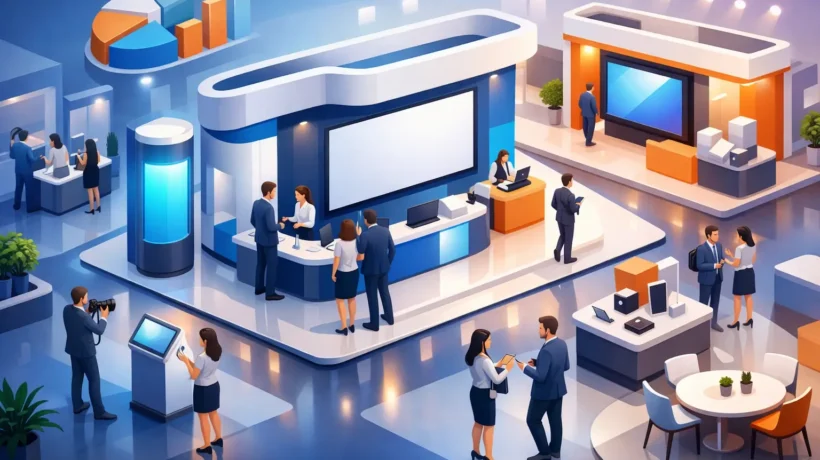
A crowded trade show floor gives attendees only seconds to decide where to spend their time. That is why the question of what makes an effective exhibit is bigger than color, size, or a clever giveaway. An effective exhibit earns attention, gives visitors a reason to engage, and helps the team turn that engagement into a meaningful next step.
The strongest environments balance imagination with discipline. They make a brand visible without becoming visually noisy, support real sales conversations without feeling stiff, and arrive ready to perform without creating an unreasonable burden for the people managing the event.
Start With a Business Objective, Not a Booth Wish List
Every exhibit decision should have a job to do. Before selecting a footprint, designing graphics, or considering technology, establish what success looks like for this particular event. A product launch may require education and demonstrations. A conference with executive buyers may call for a private meeting area. A lead-generation event may need a fast, approachable interaction that keeps traffic moving.
A broad goal such as “build awareness” is not enough to guide design. Define the audience you need to reach, the action you want them to take, and the conversation your team needs to have. Those choices affect everything from the exhibit layout to staffing levels and lead-capture methods.
For example, a company focused on qualified meetings may benefit from a more intentional hospitality space and clear appointment process. A brand introducing a complex service may need simple visual storytelling and a well-rehearsed demo station. Both can be effective, but they should not look or operate the same way.
What Makes an Effective Exhibit: Clarity at a Glance
Your exhibit has to communicate before anyone steps inside it. Attendees should be able to understand who you are, what you offer, and why it matters from several feet away. If the central message requires a paragraph of copy or a salesperson to explain it, the exhibit is carrying too much information.
A clear hierarchy makes this possible. Start with one high-value message that can be understood quickly. Support it with concise proof points, product imagery, or a focused call to action. Brand elements should be consistent and recognizable, but the design should not treat every logo, service line, and campaign message as equally important.
This is often where teams face a useful trade-off. Internal stakeholders may want every capability represented. Event audiences need a reason to stop. Prioritize the message that best serves the event objective, then give staff the tools to introduce the broader story in conversation.
Design for the View From the Aisle
The attendee experience begins before a visitor reaches the booth. Sightlines, height, lighting, open entry points, and readable graphics all influence whether the space feels inviting or easy to ignore. A dramatic feature can create presence, but only when it reinforces the brand and does not obstruct the experience.
Good design also considers the surrounding show environment. A compact inline space may need bold graphic discipline and a highly visible product story. An island exhibit may have room for architecture, multiple engagement zones, and more dimensional brand moments. Larger is not automatically better. The right scale is the one that helps your team meet its objective without spending budget on unused space or unnecessary complexity.
Build a Visitor Journey, Not Just a Structure
A beautiful exhibit can still underperform if visitors do not know where to go or what to do next. Effective environments guide people naturally from initial interest to a purposeful interaction.
Think through the sequence: What catches attention? What makes someone step in? Where does the first conversation happen? How does a visitor move from a quick overview to a demo, consultation, or meeting? What happens when the conversation ends?
The answers should shape the floor plan. Reception counters, product displays, demo areas, meeting spaces, storage, and hospitality stations each affect traffic flow. An open layout can feel accessible, but it may offer less privacy. Semi-enclosed meeting areas support deeper discussions, but too many walls can make an exhibit feel closed off. The right balance depends on the sales process, expected traffic, and the type of interaction that matters most.
Practical details matter here. Keep high-traffic areas free of bottlenecks. Place lead capture where staff can use it naturally. Make sure visitors can enter and exit without feeling trapped in a sales conversation. If product demonstrations require sound, power, or reliable connectivity, account for those requirements at the beginning rather than trying to solve them on the show floor.
Create an Experience Worth Remembering
Memorable does not have to mean expensive, oversized, or technology-heavy. It means the experience gives people a relevant reason to remember your brand after they have walked past dozens of others.
That might be a hands-on demonstration that makes a complicated offering easier to understand. It might be a tactile material choice that reflects the quality of a product. It could be a compelling visual moment, an interactive comparison, or a useful conversation with someone who understands the visitor’s business challenge.
Technology should serve that experience, not compete with it. Large displays, touchscreens, augmented elements, and digital content can be valuable when they clarify a message or make engagement easier. They can also become costly distractions when they are added simply because they appear modern. If a visitor can get the same value from a simple, well-presented demonstration, the simpler route may be more effective and easier to operate.
Give Your Team an Environment They Can Use Well
The exhibit is only part of the performance. The people inside it determine whether attention becomes a qualified opportunity. A polished environment can lose impact quickly when staff members cluster together, sit behind counters, or lack a clear approach to greeting and qualifying visitors.
Preparation should cover more than product knowledge. Staff need to understand the event goal, the primary audience, the opening questions that create useful conversations, and the criteria for a qualified lead. They should know how to use the space as intended, including where to conduct quick interactions, longer discussions, demonstrations, and scheduled meetings.
A simple event plan should establish how the team will:
- welcome attendees without overwhelming them;
- distinguish casual traffic from high-priority prospects;
- capture complete, usable lead information;
- manage appointments and follow-up ownership; and
- keep the exhibit presentable during busy show hours.
This level of coordination is especially important when multiple teams share the booth. Marketing, sales, leadership, and product specialists may all have different priorities. Aligning them before the event prevents mixed messages and makes the visitor experience feel more confident.
Plan for Execution Before You Approve the Concept
An effective exhibit is designed for the real conditions of exhibiting. That includes shipping, installation, drayage, labor, venue rules, electrical needs, storage, setup time, and the inevitable changes that arise during an event program.
A concept that looks impressive in a rendering but is difficult to transport, costly to install, or fragile under repeated use can strain both budget and internal resources. This does not mean every exhibit should be minimal. It means the creative concept and operational plan should be developed together.
For organizations that exhibit often, modular components and managed assets can make it easier to adapt a consistent brand presence across different booth sizes and locations. For less frequent exhibitors, a tailored rental approach can deliver a premium appearance without the responsibility of owning, storing, and maintaining a large inventory. The best option depends on frequency, campaign needs, budget horizon, and how much internal bandwidth is available.
Measure More Than Foot Traffic
Traffic is useful, but it does not tell the full story. A crowded exhibit with few qualified conversations may be less valuable than a smaller, more focused environment that produces meetings with the right decision-makers.
Choose measures that match the original objective. These may include qualified leads, scheduled demonstrations, meetings held, pipeline influenced, follow-up response rates, product interest by category, or sales conversations generated. Capture qualitative feedback as well. Staff often notice recurring questions, objections, and competitor activity that can improve future messaging and exhibit design.
Post-event follow-up deserves the same attention as the booth itself. Leads lose value quickly when they sit in a spreadsheet without clear ownership or timely outreach. Establish the handoff process before the show begins, and review results while the team’s observations are still fresh.
Make Each Exhibit Part of a Larger Brand Presence
The exhibit should feel connected to the rest of your physical and digital brand presence, from pre-show outreach to sales materials and post-event conversations. Consistency builds recognition, while flexibility allows the environment to respond to the audience and setting.
At FrontLine Exhibits, strategically applied imagination means treating design, logistics, and visitor experience as connected parts of the same business objective. The most effective exhibit is not simply the one attendees photograph. It is the one that makes your brand easier to understand, your team easier to engage, and your event investment easier to justify.
When planning the next event, focus on the moment you want the right visitor to have: a clear realization that your company can help solve a problem worth discussing. Build the environment around that moment, then give your team the structure and support to carry the conversation forward.