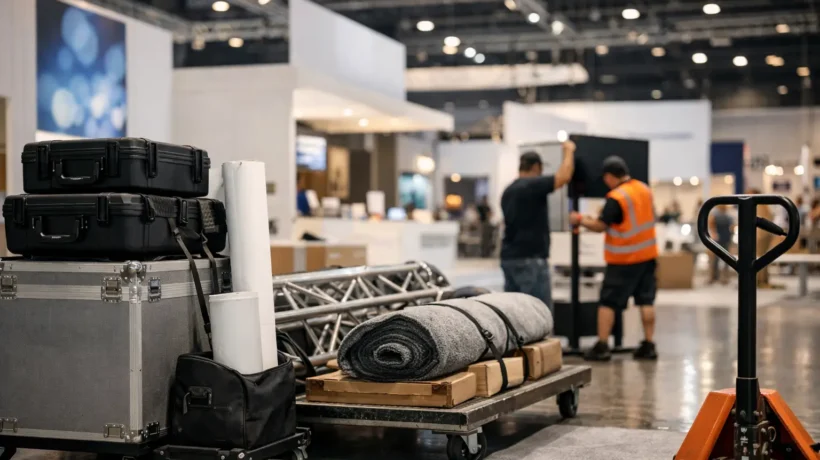
A show floor can make a polished brand look effortless. Behind that impression is a tightly managed chain of decisions: when the exhibit leaves storage, how it is packed, where it arrives, who installs it, and how every component gets home. Trade show booth logistics are the operational foundation of that experience. When they are handled early and intentionally, your team can focus on prospects and conversations instead of tracking crates, resolving paperwork, or searching for a missing graphic panel.
For marketing and event teams, the goal is not simply to get a booth from point A to point B. It is to protect a high-visibility investment, control avoidable costs, and create a reliable working environment for the people representing your brand. The most effective logistics plan begins well before the event’s move-in date.
Start Trade Show Booth Logistics at the Design Stage
Logistics should influence exhibit decisions from the first concept discussion. A dramatic structure may be exactly right for a flagship event, but it also has implications for crate count, freight class, drayage, installation labor, and storage. The right answer depends on your show schedule, budget, venue restrictions, and how often the exhibit will travel.
A modular system can make sense for a program with several regional events, especially when it can be reconfigured for different footprints. A custom property may be the stronger choice when one major show requires a distinctive, immersive presence. Rental elements can also reduce the cost and complexity of maintaining assets that are only needed once. None of these choices is inherently better. The practical question is whether the physical environment supports the campaign without creating an operational burden your team cannot sustain.
At this stage, document the details that tend to surface too late: booth size, height limits, hanging-sign rules, electrical needs, floor conditions, internet requirements, lead retrieval, and any products that need special handling. A good exhibit partner turns these requirements into a build and shipping plan rather than treating them as last-minute show services.
Build a Timeline Around Deadlines, Not Hope
Every event has deadlines for advance warehouse freight, direct-to-show shipping, material handling, labor orders, electrical service, and exhibitor paperwork. Missing one can mean higher rates, reduced installation options, or a booth that arrives at the loading dock during the busiest part of move-in.
Work backward from show opening, but give the plan real margin. Graphics need time for proofing and production. Crates need to be packed and labeled. Freight carriers need appointments. A damaged component may require a replacement. If company leadership, product samples, or a customer demonstration are involved, those details need their own deadlines as well.
A useful operating calendar identifies the owner for each decision, not just the due date. Marketing may approve graphics, operations may confirm product shipments, and a project manager may coordinate freight and labor. Clear ownership prevents the familiar situation where everyone assumes someone else submitted the order form.
Advance Warehouse or Direct to Show?
This is one of the most common freight decisions, and it deserves more thought than selecting the lowest initial price. Shipping to the advance warehouse often gives exhibitors a more predictable delivery window. Freight is received before move-in and transported to the booth space when the hall opens. It can reduce the uncertainty of waiting for a carrier at a crowded venue.
Direct-to-show freight can be useful when timing is tight, when materials cannot ship early, or when an exhibit is traveling from a previous event. However, delivery appointments, marshalling yards, and dock congestion can make direct shipping less predictable. The best choice depends on the event’s rules, your freight schedule, and the cost of risk if materials arrive late.
Pack for the Show Floor, Not Just the Truck
A crate is more than a shipping container. It is a working tool for your installation team and a safeguard for the assets inside. Clear exterior labels should identify the exhibitor name, event, booth number, crate number, destination, and contact information. Interior packing lists make it easier to confirm that graphics, hardware, lighting, literature, and accessories are where they should be.
The contents should be organized in the order they are needed. Hardware buried under finished graphics slows installation and increases the chance of damage. Small but essential items – fasteners, power strips, cleaning supplies, touch-up materials, tools, and instructions – should have a designated place rather than becoming an afterthought.
For multi-show programs, photo documentation and a simple packing map create consistency. They help a new installation crew understand the intended layout, and they make post-show inventory more accurate. This matters when an exhibit has been adjusted at several events and components begin to migrate between crates.
Treat Material Handling as a Major Budget Line
Many exhibitors budget for freight but underestimate material handling, often called drayage. Material handling covers the movement of freight from the receiving dock or warehouse to your booth space, storage of empty containers during the event, and return of those containers after the show. It can be a significant part of the total event cost.
Weight, shipment timing, special handling, and venue rules all affect the final number. A booth designed to travel efficiently may reduce costs over time, but consolidating freight carelessly can create other problems if a single oversized shipment requires special equipment. The best approach balances fewer pieces with manageable sizes and weights.
Review the exhibitor service manual before shipping, and verify whether the venue has restrictions on delivery vehicles, loading times, or outside labor. A logistics plan should also account for on-floor storage. Product cartons, giveaway inventory, and personal supplies can quickly compromise a carefully designed booth if there is nowhere to put them.
Plan Installation Around the Visitor Experience
Installation is where concept, construction, graphics, and venue conditions meet. The team needs a clear plan for what gets built first, when electrical and audiovisual components are installed, and who can make decisions if an unexpected issue appears. Time on the show floor is expensive, so uncertainty has a direct cost.
Before move-in, provide an installation packet that includes rendered views, floor plans, electrical placement, graphic locations, packing lists, and key contacts. If the exhibit includes product demonstrations, test them before attendees arrive. Confirm sightlines, lighting, screen content, storage access, and the placement of lead-capture tools.
Do not overlook the human side of setup. Sales teams need a place for coats, bags, literature, and product samples. They need enough room to have a conversation without blocking traffic. A beautiful booth that does not support how people actually work will underperform, no matter how efficiently it was installed.
Protect the Return Trip Before the Show Opens
Post-show logistics are frequently rushed because the team is tired, leads need follow-up, and everyone wants to get home. Yet the return shipment is where assets can be lost, damaged, or sent to the wrong destination. The outbound plan should be prepared before opening day.
Know whether materials are returning to a warehouse, moving to the next event, or going to a different location for refurbishment. Confirm carrier pickup instructions, bills of lading, crate counts, and destination details. Take photographs of packed crates and note any damage before they leave the floor. If a component requires repair, flag it immediately so it does not become a surprise at the next event.
Managed asset storage adds value here, particularly for organizations with a recurring event calendar. Inventory records, condition reports, graphic replacements, and scheduled maintenance preserve the usefulness of the exhibit between shows. Instead of starting each event with a scavenger hunt, the team starts with a known inventory and a defined plan.
Put One Team in Charge of the Details
Trade show programs often involve marketing, sales, vendors, venue staff, carriers, and show contractors. Without a single point of coordination, small gaps multiply. An outdated booth number, an unapproved graphic, or an unclear pickup instruction can affect the entire experience.
A full-service partner can bring design, production, logistics coordination, installation support, and asset management into one accountable process. For FrontLine Exhibits, that coordination is part of Strategically Applied Imagination: creating an environment with the presence to attract attention and the operational discipline to perform under pressure.
The best logistics plan is rarely the most complicated one. It is the one that gives your team confidence that every crate, panel, graphic, and show service has a purpose, an owner, and a place. That confidence creates room for the work that matters most on the show floor: making your brand memorable to the people you came to meet.