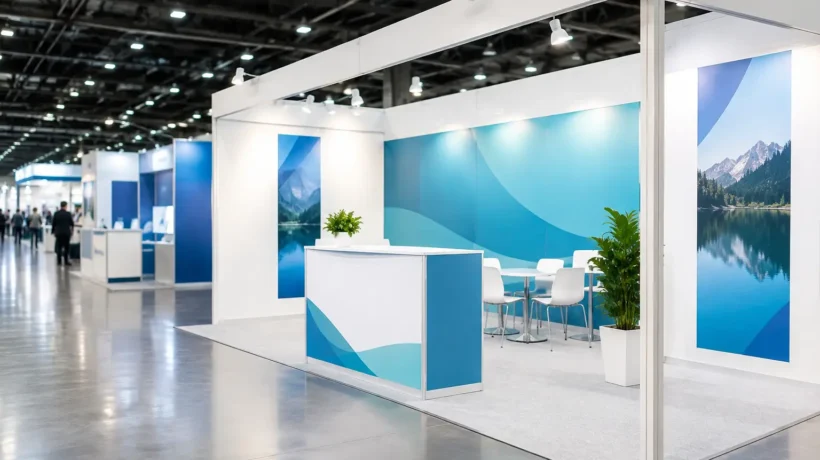
A 10-by-10 space can look modest on a floor plan and still carry a major business objective: earn attention, start qualified conversations, and make your brand memorable in a crowded aisle. So, what are inline exhibits? They are trade show displays positioned in a continuous row of booths, typically with neighboring exhibitors on both sides and exposure only from the front.
Often called linear exhibits, inline booths are one of the most common exhibit formats at conventions, conferences, and regional trade shows. Their footprint may be compact, but their strategic value is not. With the right concept, graphics, staffing plan, and operational support, an inline exhibit can deliver a polished brand presence without the cost or complexity of a large island space.
What Are Inline Exhibits in a Trade Show?
An inline exhibit occupies space along a straight line of booths. A standard inline space is often 10 feet deep by 10 feet wide, although exhibitors can reserve multiple connected spaces, such as 10-by-20 or 10-by-30. The defining feature is its location: the exhibit is bordered by neighboring booths on the left and right, with the aisle directly in front.
This arrangement affects nearly every design decision. Unlike an island exhibit, which can be approached from all sides, an inline booth must attract and guide visitors from one primary direction. Its architecture, product displays, messaging, storage, technology, and meeting area all need to work within that front-facing experience.
Trade show organizers usually set specific rules for inline spaces. These may govern wall heights, sightline restrictions, hanging signage, electrical placement, fire safety, and how far display components can extend into the aisle. A 10-by-10 inline booth may have different height allowances than a 10-by-30 booth, and the rules can vary significantly by event. Reviewing the exhibitor manual early protects the creative concept from expensive last-minute changes.
Why Inline Exhibits Remain a Smart Choice
Inline exhibits are not simply the entry-level option. They can be the right strategic choice for organizations that need to exhibit efficiently across several events, test a new market, support a focused sales team, or make a high-quality appearance at a regional show.
The most immediate advantage is cost control. Inline spaces generally require a smaller floor-space investment than peninsula or island exhibits. They also tend to need less flooring, fewer structural components, and less labor to install and dismantle. For a company attending multiple events each year, those savings can create room in the budget for better graphics, lead capture, pre-show promotion, or a more effective follow-up campaign.
They can also simplify planning. A well-designed modular inline exhibit can adapt to different booth widths and venue conditions while preserving a consistent brand presence. That flexibility is particularly useful for field marketing teams managing an event calendar with varying audiences, spaces, and deadlines.
Still, smaller does not automatically mean easier. An inline exhibit has fewer places to hide clutter, less room for staff circulation, and limited opportunities to stop traffic from multiple aisles. Every element needs a job. The most successful inline environments are disciplined, not crowded.
Inline Booths Compared With Other Exhibit Types
Understanding the alternatives helps teams select the format that supports their event goals.
A perimeter booth sits along an exterior wall of the exhibit hall rather than between two neighboring exhibitors. It often allows greater height and a more substantial back-wall treatment, but it still faces an aisle from the front. A peninsula exhibit is open on three sides and generally offers a more immersive visitor experience. An island exhibit is open on all four sides, giving brands maximum access and architectural freedom, along with greater cost and logistical demands.
Inline exhibits are best suited to a focused encounter. A visitor sees the message, understands the offer, and has a clear invitation to engage. That does not mean an inline space cannot feel immersive. It means the experience must be designed with a strong visual hierarchy and a clear path from aisle to conversation.
Designing an Inline Exhibit That Gets Noticed
The first few seconds matter. From the aisle, attendees should be able to identify your company, understand what you offer, and recognize why it may matter to them. Trying to communicate every product feature at once usually weakens that moment.
Start with one dominant message. It might be a business outcome, a product category, a campaign theme, or a concise statement of differentiation. Place it high enough to be visible over people and nearby furnishings, then support it with secondary information that rewards closer inspection. Large-format graphics can create visual impact, but only when they are readable at a distance and consistent with the broader brand system.
Architecture should reinforce that message rather than compete with it. A clean back wall, dimensional elements, integrated shelving, illuminated graphics, or a focused digital display can create depth in a limited footprint. The right approach depends on the audience and the product. A software company may prioritize a concise demo station and comfortable conversation area, while a manufacturer may need room for a physical sample or equipment demonstration.
Lighting deserves early consideration. Exhibit hall lighting is rarely designed to flatter every booth equally. Targeted lighting can draw attention to products, define focal points, and help brand colors appear more intentional. It also introduces practical requirements around power, equipment placement, and installation, which should be planned well before the show floor opens.
Make the Booth Work for the Team Inside It
An exhibit is not only a visual object. It is a working environment for the people responsible for converting attention into business conversations.
In a compact inline booth, staffing and layout are closely connected. A large reception counter can create a barrier if it occupies the entire front edge. Too many chairs can signal that the space is closed or leave too little room for visitors. At the same time, no storage plan can result in bags, shipping materials, giveaway boxes, and personal items appearing in public view.
A productive layout typically provides an open welcome point near the aisle, a defined engagement zone for demonstrations or product discovery, and discreet storage for supplies. If the sales process requires longer discussions, consider whether private meetings belong in the booth or should be scheduled elsewhere. It depends on the event, the value of the conversation, and the available footprint.
Technology should support the interaction, not turn staff into screen attendants. A monitor, tablet, or interactive display can be effective when it helps visitors see a product, compare options, or provide lead information. It is less effective when it adds visual noise or requires extensive troubleshooting during a busy show.
The Operational Details Behind a Strong Inline Presence
An inline booth can appear effortless to attendees because substantial coordination happens before the first crate reaches the venue. Floor plans, utility orders, shipping labels, drayage, installation schedules, union requirements, graphic approvals, and exhibit-hall regulations all influence the final result.
This is where a full-service exhibit partner can reduce internal workload. Design decisions are more valuable when they account for how the exhibit will ship, install, adapt, and be supported across the event program. A feature that looks impressive in a rendering but requires oversized freight, difficult labor, or repeated replacement may not be the best long-term choice.
For organizations that exhibit occasionally, a rental inline exhibit can deliver a premium appearance without purchasing and storing a complete custom property. Rentals are especially useful when a team needs a tailored look for a single event, wants to scale its presence for a major show, or is still determining which exhibit format performs best.
For frequent exhibitors, owned modular components paired with organized asset management can create a different advantage. Graphics can be refreshed, configurations can change by event, and materials can be maintained between shows rather than rediscovered under deadline pressure.
Before approving an inline exhibit plan, confirm these practical points:
- The booth dimensions, height limits, and sightline rules in the current exhibitor manual.
- Required power, internet, audiovisual equipment, and their placement within the layout.
- How products, literature, personal items, and booth supplies will be stored.
- Who will install, dismantle, ship, and inspect the exhibit before each event.
- How the booth will support lead capture, sales conversations, and post-show follow-up.
When an Inline Exhibit May Not Be the Best Fit
Inline spaces are highly effective, but they are not the answer to every exhibiting objective. If your goal is to host large product demonstrations, entertain multiple customer groups at once, or create a destination that draws traffic from every direction, a peninsula or island footprint may better support the experience.
Likewise, a brand entering a major industry event for the first time may find that a standard inline space is too small if competitors invest heavily in larger environments. But this is not always a reason to spend more on floor space. A precisely targeted 10-by-20 exhibit with distinctive graphics, active staff, and a compelling reason to stop can outperform a larger booth with unclear messaging.
The right question is not whether an inline exhibit is big enough. It is whether the space gives your team enough room to achieve the event’s specific business goal without creating unnecessary cost or complexity.
A well-planned inline exhibit turns a narrow slice of show floor into a credible, purposeful brand environment. Give it a clear message, a practical operating plan, and a reason for attendees to step out of the aisle – and that compact footprint can create a presence far larger than its dimensions.