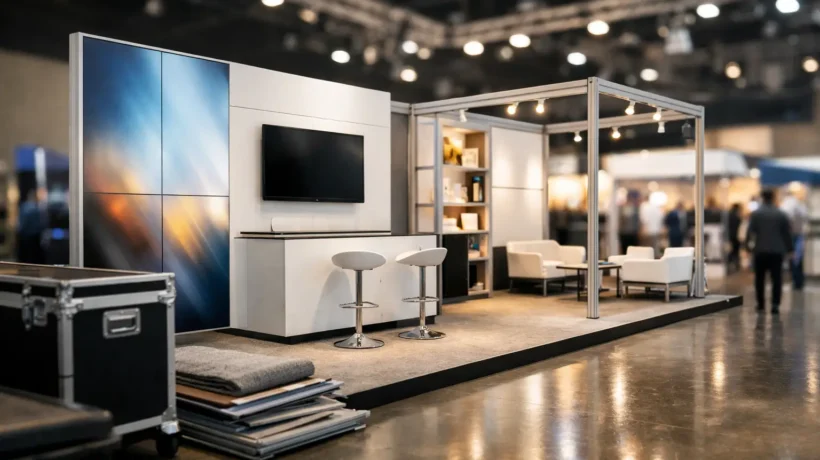
A 20-by-20 exhibit that performs beautifully at one flagship show can become an expensive problem when the next event calls for a 10-by-10 footprint, a different audience, or a tighter budget. A modular trade show booth gives marketing teams a more adaptable way to create a strong physical presence without rebuilding the entire experience for every stop on the calendar.
For organizations managing multiple events, flexibility is not just a design preference. It affects shipping, storage, labor, planning time, and the ability to keep the brand looking intentional in very different environments. The right modular approach turns those variables into a managed system rather than a recurring scramble.
Why a Modular Trade Show Booth Changes the Equation
Modular exhibits are built from components that can be reconfigured into different layouts and footprints. Those components may include structural frames, fabric graphics, wall panels, counters, monitor mounts, lighting, storage, and product display elements. The value is not in using a standardized kit for its own sake. It is in designing a system that can respond to the real demands of an event program.
A company may need an open, conversation-driven space for a regional industry show, then a more private demonstration area for a technical conference. At a larger national event, it may need a branded meeting zone, multiple product stories, and a visible overhead element. A well-planned modular system can support each scenario while preserving the visual language that makes the brand recognizable.
That consistency matters. Prospects often encounter a brand more than once, across cities, formats, and channels. If the exhibit feels improvised at every event, the brand can feel improvised too. A modular environment creates room for change without sacrificing confidence, quality, or strategic intent.
Flexibility Has Limits, and That Is Useful to Know
Not every exhibit should be modular. A major annual launch, an immersive product demonstration, or a highly architectural flagship environment may call for a custom structure developed around one specific experience. There are times when a singular physical statement is the right investment.
The strongest programs often combine approaches. A custom anchor can establish a distinctive visual presence, while modular elements extend that investment into smaller shows, customer events, and field marketing activations. The right answer depends on how often you exhibit, how varied your footprints are, how long the campaign will run, and which parts of the experience must remain fixed.
Start With the Event Program, Not the Booth Size
Teams sometimes begin by asking for a 10-by-10, 10-by-20, or 20-by-20 booth. Those dimensions matter, but they are not the strategic starting point. Before selecting structures and graphics, define what the exhibit needs to accomplish across the full event calendar.
Consider where your audience needs to pause, what your sales team needs to demonstrate, and how many conversations should happen at once. Think through the practical realities as well: whether products need to be displayed or stored, whether lead capture requires powered devices, and whether staff need an enclosed place for bags, supplies, or private discussions.
A useful modular system is usually organized around a few repeatable zones. A branded attraction point draws attention from the aisle. A product or message zone gives visitors a reason to engage. A conversation area supports sales follow-up. Storage and operational space keep the visible environment orderly. These functions may expand or contract, but they should not disappear simply because the floor plan changes.
Build a Component Plan With Purpose
The most effective modular programs do not collect pieces randomly over time. They are planned as a family of assets with defined roles. That might mean a back wall that works as a 10-foot display, expands to 20 feet, and connects to side returns for a larger footprint. It might mean counters that provide product display in one configuration and create a hospitality or demo station in another.
Graphics deserve the same discipline. A flexible structure is only helpful if the messaging can change without creating an inconsistent visual experience. Establish a primary brand layer that travels everywhere, then use interchangeable graphic panels or fabric skins to tailor product stories, campaigns, and audience-specific messages.
This approach also makes it easier to refresh the exhibit without replacing everything. When a campaign evolves, you can update the elements visitors see most clearly while keeping the structural investment in service.
Design for Event Operations, Not Just the Renderings
An exhibit can look exceptional in a rendering and still create headaches on the show floor. A modular trade show booth should be evaluated through the operational lens from the start: how it ships, how it installs, where it is stored, how often it travels, and who is responsible for each handoff.
Weight and packaging influence freight costs. The number of components influences labor time and the risk of misplaced hardware. A system that requires specialized installation may be appropriate for a high-value event, but it may not be the most efficient choice for a frequent regional schedule. There is no universal best answer. The right configuration aligns the level of complexity with the importance and revenue potential of each event.
Good exhibit management also includes documented setup instructions, labeled cases, current inventories, graphic checks, and a clear process for repairs and replacements. These details are rarely glamorous, yet they protect the investment and reduce pressure on internal teams working against compressed deadlines.
For a multi-event program, consider the full cost of ownership rather than the purchase price alone. Freight, drayage, installation and dismantle, storage, refurbishment, graphic updates, and internal coordination all affect the final number. A lower-cost structure can become expensive if it is inefficient to ship or difficult to configure. Conversely, a more considered system can create savings over repeated use.
When Rental Makes More Sense
Ownership is not automatically the best path. If your organization exhibits infrequently, is testing a new event strategy, or needs an elevated presence for one important show, a modular rental can offer a practical alternative. It provides design flexibility and polished presentation without requiring a long-term asset commitment.
Rental solutions also work well when an owned exhibit needs to be supplemented. A team may add meeting space, a larger monitor wall, custom counters, or event-specific graphics for a single show rather than purchasing components that will sit unused afterward. The goal is not to own every possible piece. It is to create the right environment for the opportunity in front of you.
Make Modularity Feel Intentional to Visitors
Visitors should never experience your booth as a collection of interchangeable parts. They should experience a clear brand story, a reason to stop, and an easy path into a useful conversation.
That requires disciplined creative direction. Sightlines should carry key messages toward the aisle. Graphics should communicate quickly at a distance, then reward closer engagement with relevant detail. Displays should support the sales conversation instead of competing with it. Lighting, material choices, digital content, and staff positioning should all reinforce the same idea.
Modularity can actually strengthen creativity when it is treated as a design constraint with purpose. Rather than designing one oversized environment and trying to shrink it later, the concept is developed to hold together at several scales. The result is a physical campaign with continuity, not a booth that happens to fit.
Decide What Success Looks Like Before You Build
A modular exhibit program should be tied to measurable event outcomes. Depending on the event, that may mean qualified leads, scheduled demonstrations, meetings with target accounts, product interactions, sales opportunities, or a stronger share of attention in a crowded hall.
Set those measures before the design is finalized. If meaningful conversations are the priority, dedicate space and staffing to them. If product education is the goal, make demonstrations easy to access and repeat. If brand recognition is the objective, invest in the high-visibility elements that carry the identity across the floor.
A well-managed exhibit does more than fill a footprint. It gives your team a dependable platform to show up prepared, adapt to the next opportunity, and make every event feel like a deliberate expression of the brand. That is where strategically applied imagination earns its place: not only in what people see, but in how confidently your organization can put it to work.