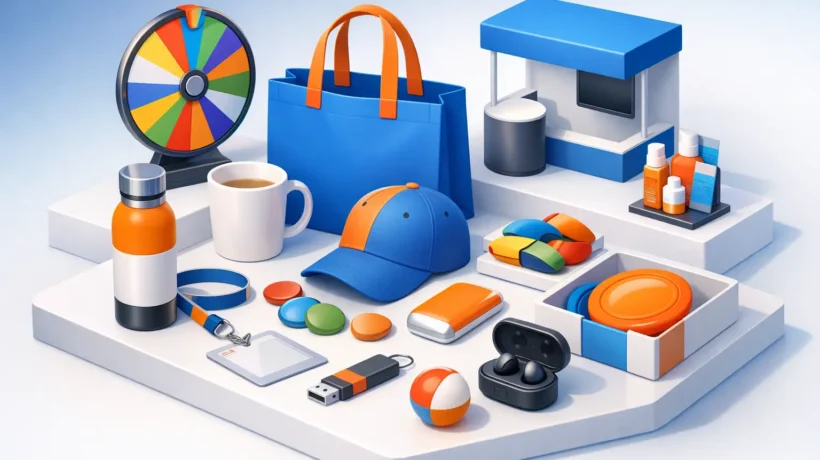
A crowded exhibit hall makes every branded giveaway compete for attention. The right trade show promotional item ideas do more than put a logo in an attendee’s bag. They give your team a reason to begin a conversation, reinforce the value of your brand, and leave a useful reminder behind after the event.
That is a high bar for a pen, tote, charger, or snack. But when promotional items are selected as part of the exhibit experience rather than ordered as an afterthought, they can support the same business goals as your booth design: visibility, qualified conversations, and a more memorable presence.
Start With the Job the Item Needs to Do
Before choosing an item, clarify what success looks like at this event. A broad-awareness campaign may need a high-volume giveaway that attendees can use immediately on the show floor. A lead-generation program may be better served by a more valuable item reserved for qualified prospects or scheduled meetings. If the goal is to reinforce a premium brand position, the item should feel considered, durable, and aligned with the quality of the environment around it.
The most effective choice also depends on the audience. A lightweight phone accessory may be welcome at a technology conference, while operations leaders attending an industrial event may respond better to a practical desk tool or travel-ready item. Relevance is more persuasive than novelty alone.
It also helps to consider distribution. If a giveaway will sit in a self-service bowl, it should be simple, durable, and easy to understand. If staff will hand it out after a product demonstration, the item can carry a stronger message or connect to a specific action. That distinction protects your budget from being spent on items that disappear without producing a meaningful interaction.
Trade Show Promotional Item Ideas Built for Use
Useful items remain visible longer, which gives your brand more chances to be remembered. They do not have to be expensive. They need to solve a small problem in an attendee’s day.
1. Charging cables and compact power accessories
Phone battery anxiety is real during a full day of appointments, event apps, and follow-up emails. Multi-tip charging cables, compact wireless chargers, or power banks can be highly valued, particularly when they are reserved for strong prospects. Technology accessories have a higher perceived value, so confirm that the quality matches the promise. A cable that fails quickly creates the wrong kind of brand association.
2. Refillable water bottles and insulated drinkware
Reusable drinkware works especially well at multi-day shows, outdoor events, and conferences with long walks between sessions. A clean, durable bottle or tumbler can remain in an office or car for years. The trade-off is logistics: heavier items increase shipping weight, storage needs, and outbound freight costs. Consider a smaller insulated tumbler or collapsible bottle if your program needs a more efficient footprint.
3. Premium notebooks with a useful interior
A well-designed notebook is an enduring choice for B2B audiences. It becomes more valuable when the inside pages offer something beyond blank paper, such as a meeting-planning template, a short industry checklist, or a page for capturing key takeaways. Keep the branding refined. A prominent logo on the cover can work, but the notebook should still feel professional enough for a prospect to bring into their own meetings.
4. Desk-friendly organization tools
Cable organizers, screen-cleaning kits, webcam covers, magnetic clip sets, and compact desk organizers are easy to carry home and useful in hybrid work environments. These items suit brands that want to stay present in the daily workspace without relying on a flashy giveaway. They are also practical for shipping in post-event follow-up kits.
5. Travel essentials
Trade show attendees are already thinking about travel. Luggage tags, packing cubes, compact umbrellas, travel pouches, and passport holders can connect naturally to the experience of being away from the office. Choose items that fit the event and audience. A travel pouch may be a smart choice for an executive audience, while an inexpensive luggage tag may be too generic for a high-consideration sales conversation.
6. Thoughtful food and beverage items
A branded coffee kit, locally inspired snack, mints, or individually packaged treats can create immediate traffic and goodwill. Food is often best used as an invitation into the booth rather than the primary takeaway. If you use consumables, plan for dietary considerations, freshness, and clear presentation. A cluttered snack table can quickly undermine an otherwise polished environment.
Give People a Reason to Keep It
A logo alone rarely makes an item memorable. The strongest promotional pieces connect to a useful message, a campaign idea, or the experience visitors have in the booth.
For example, a company focused on reducing operational complexity might offer a compact cable organizer with a concise message about bringing order to busy workdays. A brand centered on precision could pair a quality notebook with a short planning framework. A team introducing a new product could give a small item only after visitors complete an interactive demonstration, making the giveaway a physical reminder of what they learned.
This is where Strategically Applied Imagination matters. The item should feel like part of the same story as the architecture, graphics, staff talking points, and lead-capture experience. When every element points to the same idea, your brand presence feels intentional rather than assembled from separate event checklist items.
Match the Giveaway to the Conversation
Not every visitor should receive the same item. Tiered giveaway strategies can help control costs while giving sales teams a more natural way to recognize high-value interactions.
A simple, useful item can be available to all visitors who stop by. A second-tier item can be tied to a product demo, a survey, or a scheduled follow-up meeting. A premium gift can be reserved for priority accounts, customer meetings, or prospects who meet agreed qualification criteria. The approach is not about making people jump through hoops for a giveaway. It is about aligning investment with the value of the relationship and encouraging the conversations your team came to have.
If you use tiers, make the process easy for booth staff. They should know what qualifies a visitor, where items are stored, and how to avoid an awkward handoff. Clear training matters as much as the product selection.
Avoid the Common Giveaway Mistakes
The most frequent mistake is buying too early without considering the exhibit plan. An item may look appealing in a catalog but prove difficult to display, distribute, or ship. Large quantities of bulky products can create avoidable drayage, storage, and return-freight costs. Fragile items may arrive damaged. Anything with batteries, food, or international shipping requirements needs additional review.
Another mistake is overbranding. Attendees are more likely to use an item that looks good in their own professional setting. Let the product do its job, then use a logo, color accent, or concise message that supports recognition without turning the item into an advertisement no one wants on their desk.
Finally, do not measure success only by how quickly the inventory disappears. A thousand low-cost items handed out in passing may generate less value than 150 carefully distributed pieces that support real conversations. Track distribution alongside booth traffic, scans, demos, meetings booked, and post-show follow-up response. That gives your team a clearer basis for improving the program next time.
Plan Promotional Items as Part of Event Operations
Promotional products introduce real operational details: quantity forecasting, receiving dates, storage, packing, on-site replenishment, and what happens to leftovers after the event. Those details should be decided before the show floor opens, not while your team is trying to set up a booth.
For organizations exhibiting frequently, a managed inventory approach can reduce waste and last-minute ordering. For a single major event, the priority may be selecting an item that delivers impact without adding unnecessary freight or coordination. FrontLine Exhibits approaches these decisions as part of the wider physical experience, balancing creative presence with the requirements that keep event programs moving.
A good giveaway is not the centerpiece of your exhibit. It is a small, tangible extension of the promise your brand makes in the booth. Choose one that earns a place in an attendee’s workday, and it can continue the conversation long after the show floor has been cleared.