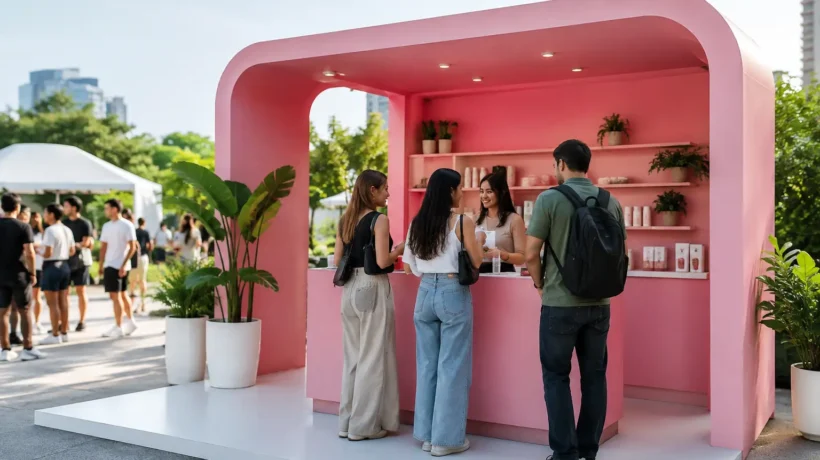
A branded pop up activation has a short window to do a great deal of work. It must stop the right people, make the brand immediately recognizable, give visitors a reason to participate, and create a useful next step for sales or marketing. When those elements are treated as separate tasks, the result can feel like a nice-looking temporary space with little commercial return. When they are planned as one experience, a pop-up becomes a focused way to put a brand into motion.
For B2B teams, that distinction matters. An activation may appear at a conference, outside a customer meeting, within a retail partner’s footprint, or in a corporate setting. The location changes, but the pressure remains the same: limited time, limited internal bandwidth, and a high expectation for polished execution. The strongest programs use Strategically Applied Imagination to turn a physical environment into a purposeful business tool.
Start With the Job the Activation Must Do
A pop-up should not begin with the question, “What will look impressive?” Start with the outcome it needs to create. Is the priority to introduce a new offering, generate qualified leads, give a sales team a better reason to invite prospects, build awareness in a new market, or reward existing customers? One activation can support several goals, but one should lead.
That primary objective shapes every decision that follows. A lead-generation program needs a clear invitation, a fast qualification process, and a practical way to route contacts to follow-up. A product launch may need more room for demonstration and storytelling. A customer appreciation activation may call for comfort, hospitality, and a more personal pace.
It also helps to define what success will look like before design begins. Attendance alone is rarely enough. Consider the number of qualified conversations, scheduled demos, content captures, product trials, meetings booked, or opportunities influenced. Clear measures protect the program from becoming an exercise in visual activity without business direction.
Build a Branded Pop Up Activation Around One Clear Idea
People decide quickly whether a space is worth their attention. The concept should be understandable at a glance, even when the activation is surrounded by competing messages. That does not mean reducing the brand to a logo wall. It means giving visitors a simple answer to three questions: Who is this for? What can I do here? Why should I care?
A clear idea can take many forms. It may be a hands-on product challenge, an expert consultation station, a diagnostic that reveals a visitor’s needs, or an environment that lets people experience the benefit of a service. The right approach depends on the audience and the setting. A technical buyer may value a guided demonstration more than a photo opportunity. A broad public audience may need a more immediate, playful interaction before it is ready for a conversation.
The physical design should support that idea rather than compete with it. Graphics establish recognition and context. Architecture directs traffic and creates zones for discovery, demonstrations, and private discussion. Lighting, screens, furnishings, and materials establish tone. Each component should earn its place by helping people enter, engage, or advance to the next step.
A common mistake is trying to tell the full brand story in every square foot. Pop-ups work best when they create a compelling chapter, not an encyclopedia. Give visitors one memorable message and a natural path to learn more from the team.
Design for the Real Conditions, Not the Renderings
A beautiful concept still has to work in a real venue. Ceiling height, access doors, fire rules, power locations, weather exposure, union requirements, loading schedules, and nearby traffic all influence what is practical. A compact activation can become complicated when it includes multiple screens, custom finishes, sampling, live demonstrations, or guest data capture.
This is where early coordination protects both the creative idea and the budget. Production details do not limit imagination. They make it usable. When design, fabrication, graphics, logistics, and on-site management are considered together, the experience is more likely to arrive as intended and operate without placing unnecessary demands on the client team.
Give Visitors a Reason to Stay
Attraction is only the first moment. The activation needs an exchange that feels worthwhile for the audience. That value may be useful information, a tailored recommendation, an efficient product test, a moment of comfort, or an experience people want to share with colleagues. The best interactions respect people’s time and make participation feel voluntary rather than transactional.
Staffing is central to this exchange. An inviting environment cannot compensate for a team that is unclear on the objective or unsure how to begin a conversation. Before the event, establish a simple visitor journey: how staff greet people, what questions they ask, when they demonstrate the offering, and how they capture or hand off a lead. Teams should know the difference between someone who is browsing, someone who needs education, and someone ready for a sales discussion.
Consider the pace of the setting as well. At a busy trade show, the interaction may need to take two minutes before a visitor moves on. At a hosted customer event, a deeper conversation may be the entire point. Designing for both scenarios without choosing one often creates awkward queues, missed leads, or staff who cannot give anyone enough attention.
Plan the Operational Backbone Early
The audience should see a polished, confident experience, not the work required to make it happen. That work includes freight, storage, venue forms, installation schedules, technology testing, inventory, staffing coordination, and teardown. It is not glamorous, but it is what keeps a strong concept from becoming a stressful event week.
A practical activation plan accounts for the life of the environment beyond one appearance. If the program will travel, modular components, durable finishes, manageable packing, and repeatable graphics can reduce future costs and protect consistency. If it is a one-time moment, rentals may provide the visual impact needed without investing in assets that will sit unused afterward.
There is no universal answer between custom ownership and rental solutions. A recurring campaign with multiple markets may benefit from owned assets and managed storage. An infrequent exhibitor, a pilot program, or a rapidly changing message may be better served by a tailored rental environment. The right decision comes from campaign frequency, budget, brand requirements, and how much internal management the organization wants to carry.
Protect the Experience With a Contingency Plan
Live environments always introduce variables. A screen can fail, a shipment can be delayed, a venue can change access times, or attendance can exceed expectations. The goal is not to anticipate every possible disruption. It is to identify the issues most likely to affect the visitor experience and prepare practical responses.
Keep critical brand elements, lead-capture methods, and the core interaction functional even if a secondary feature changes. If technology is essential, test it in the actual event conditions and have a fallback. If the activation depends on inventory or giveaway items, define how staff will manage demand. This preparation gives the on-site team room to stay focused on people rather than problems.
Measure What Happened After the Crowd Clears
A packed activation can create energy without creating impact. Review results against the goal established at the beginning. Look at lead quality, conversation volume, meeting conversion, dwell time, engagement with key features, social content captured, and feedback from the sales team. Then ask a more revealing question: what did the environment make easier?
Perhaps it gave sales representatives a better opening line. Perhaps it made a complex offer easier to demonstrate. Perhaps it created a reason for target accounts to spend meaningful time with the brand. These insights help shape the next event and make the investment more efficient over time.
A branded pop up activation earns its value when the experience feels intentional to the visitor and manageable to the team behind it. Build around a clear business purpose, give the audience a worthwhile reason to participate, and bring the operational details into the creative process early. The result is not simply a temporary presence. It is a moment people can understand, remember, and act on.