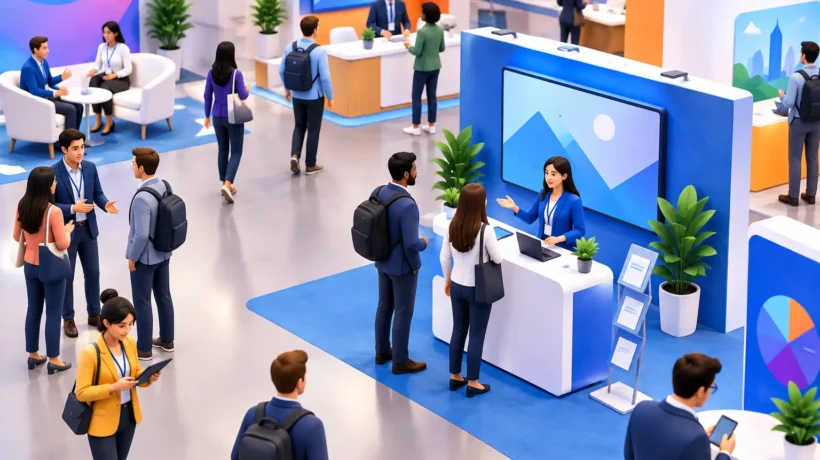
A crowded trade show floor can create a misleading impression: plenty of people moving does not automatically mean plenty of meaningful opportunities. The most consequential trade show attendee behavior trends point to a more selective visitor – one who arrives with less time, higher expectations, and a sharper sense of whether a booth deserves a stop.
For exhibitors, that changes the assignment. A larger footprint, brighter graphic, or bigger giveaway may earn a glance, but it will not reliably earn a conversation. The strongest event environments now pair immediate visual clarity with a useful reason to engage. They respect the attendee’s schedule while making the brand’s value impossible to miss.
Trade Show Attendee Behavior Trends Start With Selectivity
Attendees are not wandering the floor without a plan as often as they once did. Many research exhibitors before the event, review agendas in advance, use event apps to build schedules, and arrive with a short list of companies, sessions, or peers they want to see. They may still be open to discovery, but discovery has to happen quickly.
This does not mean a booth must explain every capability in three seconds. It means the first impression should answer a basic question just as quickly: why should this person care? A clear headline, a compelling product visual, or an immediately recognizable customer problem gives attendees a reason to pause. Once they stop, the environment and staff can earn more time.
Generic messaging becomes especially costly in this environment. Statements such as “innovative solutions” or “industry leader” rarely create a destination. Specificity does. A logistics technology company may lead with a promise around reducing delivery exceptions. A manufacturer may show a new workflow in action. A professional services firm may frame a timely regulatory challenge its audience is already discussing.
The trade-off is that specificity can narrow the audience. That is often a worthwhile exchange. A booth designed to attract the right conversations is more valuable than one that collects a high volume of unqualified scans.
Attendees Want Control Over the Conversation
Many visitors are more cautious about entering a booth because they expect a sales pitch, a lead scanner, or an interaction that is difficult to exit. This is not resistance to exhibitors. It is a response to limited time and an understandable desire to stay in control of their event experience.
The practical response is to make engagement feel invitational rather than trapping. Open floor plans, visible product demonstrations, approachable staff positions, and clearly defined activity areas give attendees choices. Someone may watch a demo from the aisle before stepping closer. Another person may prefer to browse a display and initiate the discussion when ready.
Staffing matters as much as structure. A simple opener tied to what is happening in the booth usually performs better than an immediate qualification question. “Would you like to see how teams are using this to shorten setup time?” feels different from “What does your company do?” The first offers value. The second asks for effort before the attendee sees a benefit.
That does not mean every conversation should be passive. Experienced booth teams know when to engage directly, particularly when a prospect is studying a key visual or returning for a second look. The goal is not less initiative. It is better-timed initiative.
The Booth Is Becoming a Content Environment
Attendees increasingly expect to learn something useful before they commit to a follow-up meeting. They are looking for proof, comparison, education, and a memorable experience they can share with colleagues. A booth should therefore function as more than a branded backdrop. It should be a physical content environment.
Live demonstrations remain powerful because they make an abstract claim tangible. But a demo only works when it is easy to understand from the edge of the space. Sightlines, screen height, acoustics, and crowd flow determine whether the audience can actually absorb the message. A brilliant presentation that only five people can see is not an efficient use of a busy floor.
Short-form learning also has a place. A rotating presentation, a visual case study, or a guided product comparison can give visitors value in two to five minutes. For complex offerings, that first layer should lead naturally to a deeper conversation with the right subject-matter expert.
Hands-on experiences can be equally effective, provided they support the business objective. Interactivity should reveal a product benefit, demonstrate a process, or make a challenge more understandable. If the activity draws a crowd but has no connection to the brand story, it may create traffic without creating traction.
Comfort and Convenience Influence Dwell Time
Trade show attendees are managing a demanding physical environment. They are standing for long periods, navigating noise, making decisions quickly, and often trying to fit meetings between educational sessions. Small considerations in booth planning can have an outsized effect on how long people stay and how positively they remember the experience.
A thoughtful environment might include an open meeting area for quick conversations, a quieter space for scheduled discussions, device charging integrated into a useful interaction, or comfortable seating where it makes commercial sense. These elements should not become hospitality for its own sake. They should support the type of engagement the exhibitor wants to create.
For example, a company focused on executive-level meetings may benefit from a semi-private conversation area and appointment-led traffic. A brand launching a visual product may prioritize an open, high-energy demonstration zone. Neither approach is universally better. The right choice depends on audience, show format, sales cycle, and the role the event plays in the broader campaign.
Operational details carry the same weight as creative details. Clear entry and exit paths, accessible storage, reliable power, clean surfaces, and enough room for staff to work without blocking visitors all shape the attendee experience. Presence is built through the details people notice and the details they never have to think about.
Follow-Up Expectations Are More Personal
Attendees are still willing to share information, but they increasingly expect a credible exchange. A badge scan alone is not a relationship. If the follow-up email reads like it could have been sent to anyone who walked past the booth, it confirms the visitor’s concern that their time was treated as a transaction.
The best lead-capture process records context, not just contact details. What did the person ask about? Which product, challenge, or timeline came up? Did they request a demonstration, pricing conversation, sample, or meeting with a specialist? Those notes allow sales and marketing teams to follow up with relevance while the discussion is still fresh.
Speed matters, but relevance matters more. An immediate generic message may be appropriate for a broad content request. A high-value prospect with a specific operational problem deserves a considered response from someone who understands the conversation. The follow-up plan should be established before the event, along with lead definitions, routing responsibilities, and response expectations.
Designing for the New Floor Dynamic
These attendee behavior changes ask more of exhibit planning, but they also create a clearer path to better results. Start with the few audience segments that matter most and define what each needs to see, feel, or understand at the booth. Then build the environment around the desired interaction rather than around a list of features that must be displayed.
A practical planning conversation should address four connected questions:
- What is the one idea an attendee should understand from the aisle?
- What experience gives the right visitor a reason to stop?
- How will staff move that visitor from interest to a useful next step?
- What information must the team capture to make follow-up credible?
Those questions connect design, staffing, technology, logistics, and lead management. They also prevent a common problem: treating the booth as a separate project from the campaign it is meant to support.
For organizations managing multiple shows, consistency is valuable, but repetition should not become rigidity. A modular exhibit system, adaptable graphics, and well-managed assets can preserve a recognizable brand presence while allowing the experience to fit each event’s audience and footprint. Rental solutions can offer the same flexibility for brands that exhibit less frequently or need premium impact without maintaining a large inventory.
The floor will continue to reward exhibitors who make good use of limited attention. Give people a clear reason to stop, an easy way to engage, and a conversation worth continuing after the show. That is how strategically applied imagination becomes a measurable presence.