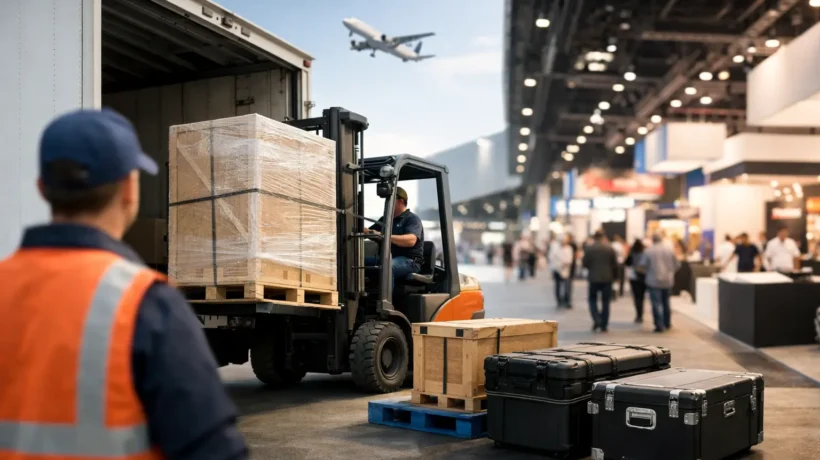
A beautifully designed exhibit can lose its impact long before the show floor if international trade show shipping is treated as a last-minute freight task. A crate delayed in customs, a missing document, or an incorrect delivery window can leave a team rebuilding plans while attendees walk past an empty space. For international exhibitors, logistics is part of the brand experience.
The goal is not simply to move a booth from point A to point B. It is to deliver every branded element in the right condition, at the right time, with the right paperwork, while giving your internal team room to focus on meetings, leads, and the event itself. That takes early decisions, clear ownership, and a plan built around the specific venue and country.
Why international trade show shipping requires a different plan
Domestic event freight has its own rules, deadlines, and material-handling fees. International shipping adds another layer: customs clearance, import regulations, language differences, local transportation requirements, border delays, and unfamiliar venue procedures. A shipment can arrive in a country on schedule yet still miss the installation window because documentation is incomplete or the consignee details do not match the paperwork.
This is why the lowest freight quote is rarely the whole story. A lower upfront rate may exclude customs brokerage, temporary import processing, destination handling, storage, or delivery appointments. It may also rely on a transit schedule with little room for weather, port congestion, inspections, or carrier changes.
The right approach depends on the exhibit and the event. A compact rental display with printed graphics may be practical to produce near the destination. A large custom environment with specialty fixtures, product samples, and established brand assets may justify international freight and a detailed return plan. The important decision is not whether to ship everything. It is determining what should travel, what should be sourced locally, and what must arrive first.
Start with the show manual, not the freight quote
Before selecting a shipping method, build the logistics plan around the event’s exhibitor manual. That document sets the conditions your exhibit must meet: advance warehouse dates, direct-to-site delivery rules, marshaling procedures, dock access, labor requirements, crate storage, move-out instructions, and the official freight forwarder or customs partner, if one is required.
International venues can have strict receiving schedules. Delivering early is not always helpful if the venue cannot accept freight or if storage charges begin immediately. Delivering late can mean paying expedited handling fees or missing a controlled installation window. Your delivery date should account for customs clearance and local transport, not just the carrier’s arrival estimate.
It also helps to identify one person or team responsible for the full shipping picture. When exhibit production, marketing, purchasing, freight forwarding, and on-site labor all operate independently, small gaps turn into expensive problems. A centralized project manager can align the shipment with the booth build, graphics schedule, show services, and installation plan.
Build time for the unexpected
International freight timelines should include a real contingency buffer. Customs authorities may request additional information. A port may experience congestion. A flight can be canceled. A shipment can be selected for inspection even when every document is accurate.
Air freight is generally faster and can provide more flexibility for urgent components, but it costs more and may impose tighter restrictions on dimensions, batteries, liquids, or other materials. Ocean freight is often more economical for larger, heavier exhibits, but it requires significantly more lead time and carries more exposure to port and schedule changes. Road freight can be effective for cross-border events in North America, although customs procedures still apply.
A smart plan does not assume every item needs the same service level. Critical graphics, replacement parts, and show-opening essentials may travel by air, while durable structural elements travel by ocean. This split approach can control cost while protecting the pieces that matter most on day one.
Get customs documentation right the first time
Customs documentation is not administrative filler. It tells authorities what is entering the country, who owns it, what it is worth, and whether it will remain there or return home after the show. Inconsistent descriptions, inaccurate values, or vague item lists can cause delays and questions at precisely the wrong moment.
Commercial invoices should describe each item clearly and consistently. “Trade show materials” is often too broad. A clearer description might distinguish aluminum exhibit frames, printed fabric graphics, LED lighting, demonstration equipment, literature, and non-saleable samples. Country of origin, quantity, unit value, total value, weight, and commodity classification may all be relevant depending on the destination.
For exhibits that will return to the United States after the event, temporary import options may help avoid paying duties that would apply to permanent imports. The appropriate process varies by country and by the nature of the goods. Carnets can be useful for qualifying professional equipment and commercial samples moving temporarily across multiple borders, but they are not a universal solution. Consumables, giveaways, items intended for sale, and locally distributed materials can require different treatment.
Do not guess at values to reduce declared costs. Understating value can create compliance problems, complicate insurance claims, and slow clearance. Instead, work from organized asset records that identify each piece, its value, and whether it is owned, rented, sold, or intended to return.
Design the exhibit for the journey
An international exhibit needs to perform under more than show-floor lighting. It must tolerate handling at warehouses, airports, ports, customs facilities, trucks, and venue docks. Design and logistics should be connected from the beginning.
Reusable, properly sized crates protect assets and make inventory easier at every handoff. Each crate should be labeled with the event name, booth number, destination contact, crate number, gross weight, dimensions, and handling instructions. Interior packing diagrams help crews repack the exhibit correctly after the show, which is especially valuable when local labor has not handled the display before.
Consider the practical limits of the destination as well. Will the venue have forklifts capable of handling large crates? Are there elevator dimensions, loading-dock height restrictions, or narrow access points? Does the booth need electrical components that comply with local voltage and plug standards? A concept can be imaginative and still be engineered for the path it must travel.
For some programs, a hybrid strategy is the strongest choice. Ship the signature structural components and brand-critical elements, then produce graphics, furniture, flooring, or secondary accessories closer to the event. This can reduce freight volume and limit risk, but it requires color control, production oversight, and enough lead time to ensure locally sourced elements meet brand standards.
Plan the return before installation begins
Move-out is where hard-won organization often disappears. After several long show days, the team is focused on getting home, local labor is working quickly, and a shipment that arrived carefully packed can leave with incomplete inventory or missing documents.
Create a return packing plan before the exhibit opens. It should identify what returns, what is consumed, what is donated or disposed of, and what will be stored locally for a future event. Photograph packed crates, retain copies of the inbound documentation, and make sure serial numbers or asset tags remain visible where needed. If the return shipment differs from the outbound shipment, customs records must reflect that change.
This is also where exhibit asset management creates value beyond one event. When graphics, hardware, accessories, and crates are tracked accurately, teams can make better decisions about what to reuse, refresh, repair, or replace. The result is less duplicate purchasing and greater confidence when the next international event appears on the calendar.
Give your team a single source of truth
International programs involve many moving parts, but the working plan can remain clear. Maintain one current schedule with production completion dates, freight pickup, customs document deadlines, estimated arrival, venue receiving dates, installation, show dates, dismantle, and return pickup. Assign an owner to every decision, especially customs documents, consignee information, and on-site receiving.
FrontLine Exhibits approaches these details as part of the same strategic work that shapes the exhibit itself. The visual concept earns attention, while disciplined management protects the investment behind it. Neither should be left to chance.
A strong international shipping plan gives your exhibit room to make the entrance it was designed to make. Start early enough to ask the practical questions, build contingency into the timeline, and let every crate support a more confident presence on the show floor.