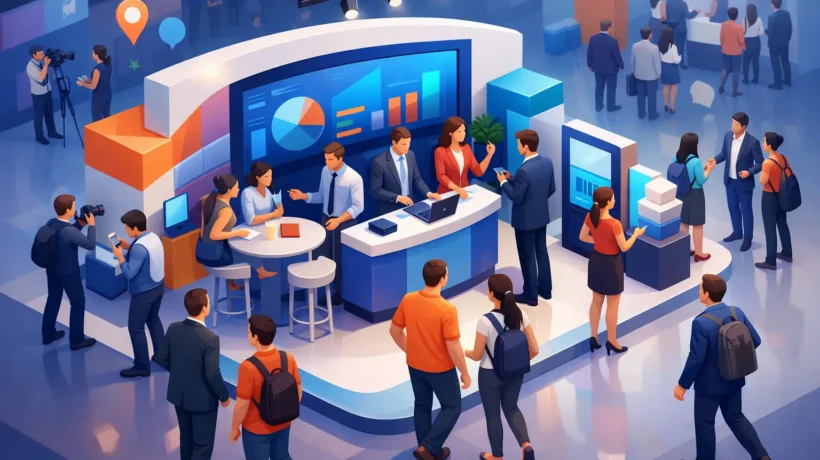
The aisle is busy, your team is ready, and the booth next door is pulling people in. The difference is rarely a single giveaway or a bigger sign. Knowing how to increase booth traffic means creating a reason for the right attendees to stop, understand what you do, and feel that a conversation is worth their time.
Traffic is not just a volume metric. A booth packed with people who cannot buy, influence, or refer business can exhaust your staff without improving event results. The better objective is qualified traffic: the people whose needs, roles, and timing align with the conversations your team came to have.
Start With the Behavior You Want to Create
Before choosing a footprint, graphic treatment, or attraction, define the action that matters most at this event. Do you need product demonstrations with technical buyers? Meetings with existing accounts? New market awareness? A scan is useful only when it supports a larger objective.
That objective should shape the entire booth experience. If your priority is scheduled sales conversations, build a campaign that makes booking easy before the show and gives those meetings a clear destination on the floor. If you are introducing an unfamiliar capability, the environment may need to communicate the value proposition in seconds, then offer a simple way to learn more.
A useful planning question is: what should a qualified visitor know, feel, and do within the first 30 seconds? The answer creates focus. It also prevents a common exhibiting problem: trying to explain every product, service, and company milestone from every wall of the booth.
Make Your Booth Easy to Notice and Easier to Understand
An exhibit earns attention before it earns engagement. In a crowded hall, visitors make fast decisions based on what they can see from the aisle, whether the space appears approachable, and whether they can quickly understand why it is relevant.
Design for the view from the aisle
Your strongest visual message should be visible above and beyond the immediate footprint. That does not always mean making everything larger. It means using height, contrast, lighting, and disciplined graphic hierarchy to create a clear focal point. A distant attendee should be able to recognize your brand and grasp one meaningful idea without walking up to read a paragraph.
Lead with outcomes rather than internal language. “Reduce inspection time” is more immediately useful than a product family name. “Build faster, with fewer handoffs” can be stronger than a list of features. The exact message depends on your audience, but clarity consistently outperforms cleverness that needs explanation.
Protect the entry point
A beautiful booth can still discourage traffic when counters, furniture, screens, or staff create a physical wall at the aisle. Give visitors an obvious path in and a comfortable place to pause. Open corners often invite more engagement than a fully enclosed layout, particularly for brands that need discovery conversations.
There is a trade-off. Enclosed spaces can support private meetings, premium hospitality, or controlled demonstrations. If privacy is necessary, balance it with an outward-facing element that gives passersby a reason to enter. The exhibit should serve the sales process, not just the rendering.
Give people something worth seeing in person
The best attraction is connected to your value proposition. A live demonstration, hands-on comparison, working prototype, diagnostic tool, or expert session can create legitimate reasons to stop. A generic game may produce scans, but it can also pull attention away from the business purpose.
Use interactive elements selectively. If a demonstration requires a knowledgeable staff member and five minutes of explanation, it may be ideal for a high-value technical audience but inefficient for a high-volume awareness show. Match the experience to the capacity of your team and the pace of the event.
Create Demand Before the Doors Open
Waiting for attendees to discover you on the show floor leaves too much to chance. Pre-show promotion gives prospects a reason to look for your booth, while also helping your team identify priority conversations before travel begins.
Start with your customer and prospect lists. A personal outreach from a sales representative or subject-matter expert usually carries more weight than a general invitation. Make the ask specific: reserve a demonstration, see a new launch, discuss a current challenge, or meet an expert at a designated time.
Support that outreach through your event channels, email campaigns, and social posts. Keep the message consistent with the booth story. If the exhibit promises a live product comparison, show enough of that experience in advance to create curiosity without explaining away the visit.
For key accounts, schedule meetings before the show whenever possible. This protects time for the people who matter most and creates momentum around the booth. It also improves staffing decisions because you can see where your team will be needed throughout each day.
Turn Passersby Into Conversations
Booth staff have more influence on traffic than most teams realize. People can sense when a team is attentive, confident, and ready to help. They can also sense when everyone is looking at a phone, talking only to colleagues, or waiting behind a counter.
Train staff to acknowledge people without pouncing on them. An open posture, eye contact, and a simple observation tied to the exhibit can work better than “Can I help you?” Try an invitation that connects to the attendee’s likely interest: “Are you working on reducing turnaround time this year?” or “Would it help to see how this works in a real workflow?”
The team should know how to qualify gracefully. Not every visitor needs the same conversation, and not every conversation needs a senior seller. Establish a simple handoff process for prospects, customers, media, job seekers, and casual visitors. This keeps the booth welcoming while protecting valuable staff time.
Avoid overstaffing the front of the booth. A cluster of employees can feel like a barrier, especially in a smaller footprint. Spread the team through the space, assign roles by time block, and give people permission to take breaks away from the visible exhibit area.
Use Programming to Create Natural Peaks
Scheduled activity gives attendees a reason to return and gives your promotion a concrete message. Short demonstrations, customer conversations, product reveals, or educational sessions can be effective when they are frequent enough to fit trade show schedules and brief enough to respect attention spans.
Make the timing visible. A monitor, small schedule graphic, and staff invitation can direct people toward the next session. If the topic is valuable, attendees will often bring colleagues back with them. That is stronger traffic than a random crowd gathered around a prize drawing.
Programming requires operational discipline. Confirm power, audio, sightlines, staffing, product readiness, and lead capture before the show opens. A compelling idea loses momentum when the screen fails, the presenter is pulled into another meeting, or the aisle cannot hear the message.
Measure What Actually Worked
Badge scans alone do not explain performance. Track the source and quality of traffic when practical: scheduled meeting, outbound invitation, walk-up, partner referral, session attendee, or repeat visitor. Ask staff to note the most common questions and objections. Those details can improve the next day of the show, not just the next event.
Look at conversion points as well. How many people entered the booth? How many watched a demonstration? How many became qualified leads, booked follow-up meetings, or advanced an existing opportunity? The right benchmarks depend on your sales cycle and event purpose, but the progression matters more than raw volume.
After the event, compare the plan with the reality. Was the key message visible? Did the layout support the desired interaction? Did pre-show outreach generate appointments? Were staffing levels appropriate at peak hours? This is where thoughtful asset management and event reporting can turn one trade show into a more efficient program over time.
Build a Presence That Can Perform Repeatedly
A high-traffic booth is not created by decoration alone. It is a coordinated environment where strategy, visual impact, operations, promotion, and people support the same business goal. That is the principle behind Strategically Applied Imagination: creative decisions should create a stronger commercial presence, not more complexity for your team.
The next time you plan an exhibit, resist the pressure to add one more message, one more screen, or one more giveaway. Choose the few experiences that give the right people a compelling reason to stop. When your booth makes that reason clear and your team is prepared to act on it, traffic becomes the beginning of a productive conversation.