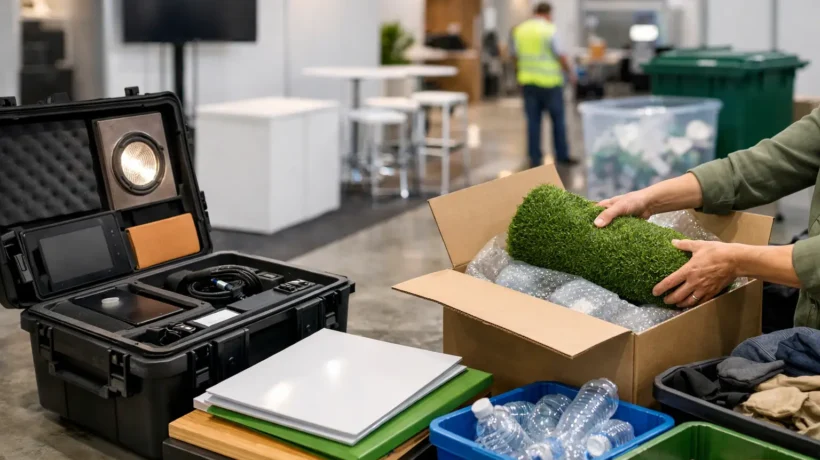
A custom exhibit does not stop being a business asset when the show floor closes. It becomes a collection of components, graphics, technology, furnishings, and brand materials that must be accounted for, protected, and ready for the next opportunity. Effective exhibit asset management turns that post-show responsibility into a source of control, consistency, and better event economics.
For marketing and event teams, the difference is substantial. Without a clear system, a booth can be technically owned but functionally unavailable: stored in an unknown location, missing a critical component, packed incorrectly, or carrying graphics that no longer represent the brand. With the right management process, the same asset base can support a more confident, more efficient event program.
Why Exhibit Asset Management Is a Strategic Function
Trade show budgets are often evaluated in terms of booth space, travel, freight, labor, and sponsorships. Those costs matter, but the exhibit itself deserves the same disciplined oversight as any other major marketing investment. A well-designed environment may be used across multiple events, audiences, and footprints. Its value depends on how reliably it can be redeployed.
Exhibit asset management is the operational practice of tracking, storing, maintaining, planning, and preparing those physical assets over time. It includes the obvious items, such as structural frames and branded graphics, as well as the easy-to-miss details: hardware, monitors, cables, flooring, literature holders, lighting, product displays, and packing materials.
This work reduces waste, but it is about more than avoiding replacement costs. It gives teams a clearer answer to practical questions that shape event decisions: What do we have? What condition is it in? Can it support the requested footprint? What needs to be updated before the next show? Who is responsible for getting it there and back?
When those answers are available early, event planning becomes more strategic and less reactive.
The Hidden Cost of Poor Asset Control
The most expensive exhibit problems are not always dramatic. More often, they surface as accumulated friction. A missing connector creates a rush shipment. An outdated graphic is discovered during installation. A display is repaired at show-site rates because its condition was not reviewed after the previous event. A team purchases a duplicate item because no one can confirm whether the original is in storage.
Each issue may look minor on its own. Across a calendar of regional shows, customer events, and sales meetings, however, they consume budget and internal bandwidth. They also place brand presence at risk. A booth that arrives incomplete or visibly worn sends a message before a single conversation begins.
The challenge grows for organizations with multiple teams using the same assets. Field marketing may need a compact configuration for a local event while a national sales team needs a larger environment for an industry show. Without a central record of availability and components, two reasonable requests can collide.
The goal is not to manage every screw with unnecessary bureaucracy. The goal is to apply the right level of visibility to the assets your organization depends on. A single annual show may call for a straightforward storage and inspection plan. A multi-event program with modular properties, frequent graphic changes, and several internal stakeholders needs a more detailed operating system.
Build an Inventory That Supports Real Decisions
A useful inventory does more than list items. It helps a team make decisions before deadlines force expensive compromises. Every asset should have a clear identity, an accurate quantity, a current condition, and a known storage location. It should also be connected to the exhibit configuration or event use it supports.
For example, a record for a monitor should identify its size, mounting method, power requirements, protective case, working condition, and compatible exhibit structures. A graphic record should include dimensions, version, messaging, installation location, and whether it remains approved for use. That level of detail prevents a warehouse inventory from becoming a vague catalog that still requires guesswork.
Photography is especially valuable. Images taken when assets are checked in and checked out establish a practical condition record. They also help event teams visualize a configuration without unpacking every case or relying on memory from a show six months ago.
A good inventory should distinguish between reusable components and consumables. Hardware, frames, counters, furniture, lighting, and durable cases are managed for repeated use. Printed literature, promotional items, and certain dated graphics need replenishment or retirement plans. Treating both categories the same can lead to over-ordering, cluttered storage, and inaccurate availability reports.
Track condition, not just location
Knowing where a component is stored is only part of the picture. An exhibit may return from an event with scratches, broken hardware, or a monitor that worked intermittently. If those issues are not documented during check-in, they tend to emerge at the worst possible time: during pre-show packing or on the event floor.
Condition checks should happen after every deployment. This is the right time to note repairs, clean components, test technology, evaluate graphics, and confirm that all pieces returned. It is also the best time to capture feedback from the team that staffed the experience. Perhaps a counter created a traffic bottleneck, a storage closet was too small, or a message panel was no longer relevant. Asset management can carry those lessons forward into the next activation.
Storage Should Protect More Than the Physical Exhibit
Storage is not simply a place to put crates between events. It is part of the exhibit’s lifecycle. The wrong environment can shorten the usable life of graphics, electronics, flooring, and finished surfaces. Poor labeling makes access slower. Incomplete packing can turn a familiar booth into a difficult installation.
A managed storage approach protects components while preserving the logic of the exhibit. Cases should be labeled clearly, hardware should be organized and counted, and components that deploy together should remain easy to identify as a group. Packing diagrams and installation references should travel with the asset record rather than live only in one employee’s inbox.
Security and access matter as well. Branded properties can include valuable technology, proprietary product displays, customer-facing messaging, and campaign materials that should not be available to every party handling a shipment. A managed process establishes accountability from warehouse receipt to outbound freight and return shipment.
There is a trade-off worth recognizing. Storing every possible element for every future scenario can consume space and management time. Periodic asset reviews help determine what should be retained, refreshed, repurposed, sold, or responsibly retired. The right choice depends on the asset’s condition, adaptability, storage cost, and relevance to the current brand strategy.
Plan Each Event From What You Own
The strongest event programs begin with objectives, audience, and footprint requirements. Asset visibility makes it easier to translate those needs into an appropriate physical environment. Instead of beginning every show with a blank slate, teams can assess which assets are available and where a tailored addition will create the greatest impact.
That does not mean repeating the same booth everywhere. A modular exhibit system can be configured differently for a 10-by-10 space, a 20-by-20 island, a customer roadshow, or a corporate lobby. The key is to understand the components well enough to design intentionally around them.
Planning from an accurate asset base also improves budgeting. Teams can separate reusable assets from event-specific expenses, identify graphic refresh needs early, and avoid paying rush rates for items that could have been prepared weeks before. If a major campaign shift is approaching, the asset record can reveal whether existing structures can support the new creative direction or whether a larger reinvestment is justified.
For organizations that exhibit infrequently, this analysis can also clarify when rental is the more sensible option. Ownership creates value when assets are used and managed effectively over time. Rentals can offer premium impact with less storage responsibility when event frequency, footprint needs, or campaign plans are uncertain. The right answer is based on the program, not a one-size-fits-all model.
Connect Logistics to Brand Readiness
An exhibit can be beautifully designed and carefully stored, yet still fail operationally if shipping, installation, and return logistics are disconnected from the asset plan. Every deployment should begin with a confirmed bill of materials, packing requirements, destination details, target dates, and clear ownership of on-site responsibilities.
After the event, the process should continue through check-in, inspection, repair recommendations, inventory updates, and storage placement. This closed loop is what keeps asset records accurate. It also gives marketing teams a dependable foundation for the next request.
At FrontLine Exhibits, managed services bring design, production, logistics, and asset care into one coordinated view. That coordination helps clients focus their attention on the conversations and outcomes the environment is meant to create, rather than on tracking cases, chasing freight updates, or searching for missing hardware.
Treat Assets as a Living Part of the Brand
The best exhibit programs evolve. Messaging changes, product lines expand, audiences shift, and event goals become more specific. Asset management should make that evolution easier, not hold it back. When a team understands what it owns and what each component can do, it can make smarter choices about reuse, refresh, and reinvention.
A well-managed exhibit is ready to support the next meaningful brand moment. That readiness begins long before the next show date, with an organized record, a careful check-in, and a plan for putting every asset to work.