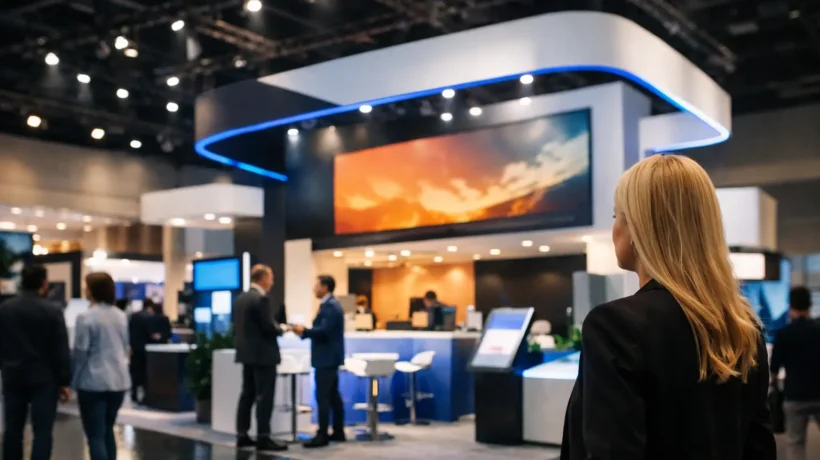
A crowded show floor gives attendees seconds to decide whether your brand is worth their time. They are scanning for relevance, navigating appointments, and moving past dozens of competing messages. Custom trade show exhibits give that brief moment a purpose: they turn a branded footprint into a place that can attract the right people, support a productive conversation, and leave a clear impression after the event.
That is a different standard than simply building a booth that looks polished. A strong exhibit has to earn attention visually, then make the next action easy for visitors and staff. It should reflect the scale of your brand, but it also needs to work under real show conditions: freight deadlines, installation rules, varying floor plans, limited staffing, technology needs, and a sales team with a full calendar.
The most effective custom environments begin with business intent. Design is the visible result of strategy, requirements, and carefully managed execution.
A Booth Is a Working Brand Environment
A custom exhibit is often judged first by its appearance, but its value comes from what it enables. For one company, the priority may be scheduled product demonstrations with enterprise buyers. For another, it may be increasing awareness in a new market, creating a hospitality space for existing customers, or giving sales representatives a credible setting for serious conversations.
Those objectives lead to different design decisions. A company launching complex technology may need a clear demo theater, acoustical separation, and enough power and data capacity to avoid a fragile presentation setup. A brand focused on relationship-building may benefit more from inviting semi-private meeting areas, comfortable seating, and a hospitality flow that does not interrupt conversations. A beautiful structure that does not support the intended visitor behavior is an expensive backdrop.
This is why exhibit planning should consider the full experience, not only the physical structure. What should a person understand from 20 feet away? What should persuade them to enter? What should happen once they are inside? What information should they take with them, and how will your team capture a meaningful next step?
Start Custom Trade Show Exhibits With a Clear Job
Before discussing square footage, finishes, or graphic treatments, define what the exhibit must accomplish at this specific event. The same brand may need a different presence at an industry conference, a regional sales meeting, and a customer roadshow. Reusing a visual idea without reconsidering the event audience can make the program feel disconnected from its goals.
A useful project brief identifies the target visitor, the primary action you want that visitor to take, the event’s role in the sales cycle, the products or messages that matter most, and the metrics that will define a successful show. These decisions provide the design team with direction and give internal stakeholders a shared basis for approving the investment.
Clarity also prevents a common problem: trying to communicate everything at once. Trade show attendees do not read a booth like a brochure. A focused hierarchy helps them quickly recognize who you are, why you matter, and where to go next. Supporting details can be delivered through a demonstration, conversation, screen content, or follow-up materials.
Design for the First 10 Seconds
The first impression should not require explanation. Your most recognizable brand elements need to be visible from key approach angles, while the central message should be concise enough to absorb at a glance. This does not mean every exhibit needs oversized graphics or bright visual effects. In some categories, confidence comes from restraint, thoughtful materials, and a calm space amid visual noise.
Sightlines matter as much as graphics. Tall features can establish presence across the hall, but they must comply with show regulations and avoid blocking key messaging. Open corners can invite traffic, while a more enclosed plan may create a stronger meeting environment. The right choice depends on whether your priority is broad engagement, qualified conversations, or a balanced mix of both.
Build the Visitor Journey Into the Floor Plan
Exhibit layouts work best when they anticipate how people actually move. An open front can reduce hesitation. A clear product zone can help visitors self-select. Meeting areas positioned away from the busiest aisle can give sales teams enough privacy to discuss real business without making the booth feel inaccessible.
Consider the journey in stages. An attendee notices the exhibit from the aisle, understands the value proposition, enters without confusion, engages with a product or person, and leaves with an appropriate next step. At each stage, the environment should remove friction rather than add it.
This is especially important when multiple activities happen in the same footprint. Product demos, lead capture, executive meetings, storage, hospitality, and staff circulation all compete for space. If they are added late in the process, the result can feel crowded and improvised. When they are planned together, the booth can remain open and purposeful while supporting the operational realities of a busy event.
Staff workflow deserves the same attention. Where will personal items, literature, refreshments, replacement graphics, and equipment be stored? Can team members move between functions without crossing a customer conversation? Is there a place to reset a demo or prepare for the next appointment? These practical details protect the visitor experience and reduce pressure on the show floor.
Choose What Should Be Custom, Rental, or Reusable
Custom does not have to mean building every component from scratch for one event. It means tailoring the environment to your brand, objectives, and practical requirements. In many cases, the strongest solution combines custom-designed elements with rental structures, reusable components, and event-specific graphics.
A fully owned custom exhibit can make sense for organizations with a consistent event calendar, recurring booth sizes, and a long-term need for a distinctive brand presence. Ownership provides control and can create efficiencies over time when assets are maintained, inventoried, and deployed strategically. It also requires a plan for storage, refurbishment, transportation, and adaptation as brand messaging evolves.
Rental solutions can be a smart choice for infrequent exhibitors, organizations testing a new event strategy, or teams facing a large booth footprint they will not use again soon. A rental structure can still feel highly tailored through architecture, graphics, lighting, furnishings, and interactive elements. The trade-off is that certain structural choices may be constrained by available inventory or show timing.
Hybrid programs often offer the most flexibility. Reusable branded assets can carry core identity across events, while rental elements scale the environment for each venue and audience. This approach can help marketing teams protect their visual standards without committing to an inflexible booth design.
Plan for Execution While the Concept Is Still Taking Shape
A compelling concept only succeeds if it can be produced, shipped, installed, and supported reliably. Waiting until design is approved to address logistics creates avoidable compromises, particularly when exhibit halls have labor rules, electrical requirements, rigging restrictions, advance warehouse deadlines, or limited installation windows.
Project management should run alongside creative development. That means coordinating graphic production, engineering, shipping plans, technology needs, show services, install and dismantle labor, and contingency planning early enough to make informed decisions. A screen location affects power and data. A suspended sign affects rigging approvals. A custom finish affects production lead time and crate configuration. None of these details are separate from design because each one shapes what is possible.
For teams managing a multi-show program, asset management becomes equally valuable. Accurate inventories, condition reporting, storage coordination, and a plan for graphic updates help prevent unnecessary replacement costs and last-minute surprises. The goal is not simply to get through one show. It is to make each event easier to execute and more consistent with the last.
FrontLine Exhibits approaches this work as Strategically Applied Imagination: creative presence supported by the planning and management required to deliver it with confidence.
Give Your Team a Space They Can Use Well
Even the best exhibit cannot compensate for an unprepared team. Staff should understand the intended visitor journey, the main messages, how demonstrations will run, where meetings take place, and how leads will be qualified. A short pre-show walkthrough can reveal issues that drawings do not: a screen that creates glare, a meeting table that feels too exposed, a product display that needs a clearer explanation, or a traffic pinch point near the entrance.
Create a simple plan for peak traffic. Decide who greets, who demonstrates, who handles scheduled appointments, and who records lead details. When everyone knows their role, the booth feels composed rather than reactive. Visitors notice that level of readiness.
Measure More Than Foot Traffic
Attendance estimates and badge scans can be useful, but they rarely tell the full story. A smaller number of qualified conversations may be more valuable than a high volume of casual visitors. Measure performance against the job the exhibit was designed to do: booked meetings, completed demonstrations, opportunities created, customer engagement, media interest, pipeline influence, or post-show follow-up activity.
Collect feedback from the people who used the space. Sales teams can identify where conversations happened naturally and where the layout created friction. Event managers can document operational lessons. Marketing leaders can assess whether the brand message landed as intended. Those insights should shape the next deployment, whether that means refreshing graphics, adjusting the floor plan, adding a meeting area, or changing the event mix entirely.
The best custom trade show exhibits do more than command a glance. They give your brand a deliberate place to show up, your team a better way to work, and your audience a reason to begin the conversation.