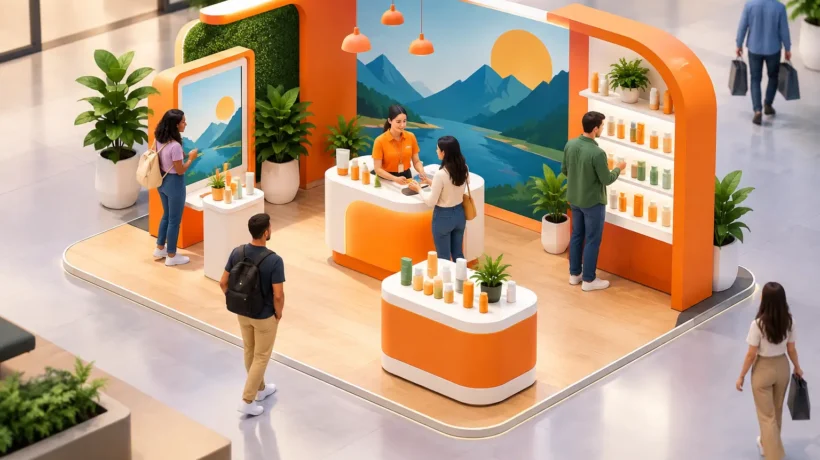
A shopper pauses at an unexpected display, tests a product, speaks with someone who knows the answer to a real question, and leaves with a reason to remember the brand. That is the opportunity behind retail activations. Done well, they make a store visit feel less like a transaction and more like a meaningful brand encounter.
For B2B marketing and brand teams, the challenge is not simply creating something eye-catching. It is creating a physical experience that works within the realities of a retail footprint, supports sales goals, represents the brand accurately, and can be delivered consistently from one location to the next. Strategically applied imagination matters most when it is paired with disciplined planning.
What Retail Activations Are Designed to Do
A retail activation is a temporary or semi-permanent branded experience placed within or near a retail environment. It may introduce a new product, encourage sampling, drive traffic to a department, support a seasonal campaign, collect customer feedback, or turn an ordinary shopping trip into an event.
The format can range from a compact product demonstration station to an immersive shop-in-shop environment. The best choice depends on the product, the audience, the store’s operating requirements, and the desired customer action. A premium technology product may benefit from guided hands-on demonstrations. A food or beverage brand may need an efficient sampling workflow. A service-based company might create a consultation space that makes a complex purchase feel more approachable.
The physical environment is only one part of the equation. Staffing, messaging, inventory, traffic flow, training, logistics, and measurement all affect whether the activation produces a return. A visually impressive installation that creates a bottleneck, confuses store associates, or leaves staff without the right product information will not deliver its intended value.
Start With the Moment You Want to Create
The strongest concepts begin with a clear definition of the customer moment. Rather than asking, “What should the display look like?” ask, “What should a visitor understand, feel, or do within three minutes?” That question gives the creative team and operational team a shared target.
For one campaign, the desired action may be simple product trial. For another, it may be a scheduled consultation, a loyalty sign-up, a social share, or a conversation with a sales representative. Trying to accomplish all of these at once can weaken the experience. A focused activation gives visitors a clear invitation and makes the next step easy.
The concept should also respect the retail setting. Stores have their own visual standards, customer traffic patterns, safety policies, and peak periods. An activation that feels perfectly designed in a presentation may not work on a Saturday afternoon when aisles are crowded and associates are balancing multiple customer needs.
A useful planning exercise is to map the visitor journey from 10 feet away to the exit. What catches attention? What signals the purpose of the experience? Where does a visitor stand? What happens while they wait? How does the team begin a conversation? What takeaway, purchase path, or follow-up action comes next? When these details are considered early, the concept becomes easier to execute and more comfortable for customers to engage with.
Design for Attention and Operational Reality
Retail spaces demand more from a branded environment than a trade show booth does. The experience must attract attention without overwhelming the store, communicate quickly, and accommodate visitors who may have no intention of stopping. It also needs to survive repeated use, frequent cleaning, changing inventory, and sometimes compressed installation windows.
Visual hierarchy is essential. From a distance, the brand and core message should be recognizable. At close range, product benefits, instructions, and calls to action should be easy to find. Too much copy turns an activation into a wall of information. Too little context leaves visitors unsure of why they should participate.
Modular design often provides a practical advantage. Components that can be reconfigured, refreshed with new graphics, or scaled for different store footprints can extend the life of campaign assets. This is especially valuable for regional rollouts, seasonal programs, and brands testing a concept before committing to a larger deployment.
However, modular does not have to mean generic. Tailored graphics, dimensional details, lighting, demonstration surfaces, and thoughtful material choices can give a flexible system a distinct brand presence. The goal is to create an environment that looks intentional in every location, not like a standard fixture with a logo applied at the end.
Build Around the Store, Not Against It
A retail partner’s requirements should shape the solution from the beginning. Confirm access times, loading procedures, electrical availability, ceiling restrictions, fire and safety rules, fixture limitations, and storage options before production begins. These are not administrative details to solve later. They define what can be installed, how long it will take, and what the final experience can realistically include.
It also helps to plan for the human realities of the store. Can an employee restock samples without crossing the customer queue? Is there a concealed place for supplies? Can the activation be reset quickly after a busy period? Does the footprint leave clear sightlines and accessible pathways? Small operational decisions protect the polished impression the brand worked hard to create.
Staff the Experience Like a Brand Conversation
A retail activation is often judged by the people running it as much as by the environment itself. Brand ambassadors and product specialists should understand more than a script. They need to know how to recognize an interested visitor, adapt to different questions, handle objections appropriately, and guide people toward the intended next step without creating pressure.
Training should cover the operational basics as well: opening and closing procedures, replenishment, cleaning, lead handling, escalation contacts, and brand standards. When staffing changes across locations or campaign dates, a concise field guide and clear training process help protect consistency.
There is a trade-off between a high-touch experience and throughput. A deeply personalized demonstration may be ideal for a high-consideration purchase, but it can limit the number of visitors served. A fast sampling experience can reach more people, but may not create enough time for a detailed brand story. The right model depends on the value of each interaction and the traffic conditions of the location.
Measure What the Activation Was Built to Change
Foot traffic and impressions are useful, but they rarely tell the full story. Measurement should connect directly to the activation’s original purpose. If the campaign is intended to create trial, track samples distributed and product conversion where possible. If it is meant to generate leads, measure qualified conversations, appointments, and follow-up outcomes. If the goal is awareness, customer feedback and engagement time can offer more insight than a simple visitor count.
A practical measurement plan typically combines several signals: total interactions, dwell time, product demonstrations completed, purchases or redemptions, lead quality, staff observations, and store feedback. The most valuable insight often comes from comparing results across locations, time periods, or activation formats. A smaller footprint in a better-positioned area may outperform a larger installation placed where shoppers are moving too quickly to engage.
Teams should also capture qualitative learning while the campaign is active. What questions come up repeatedly? Where do visitors hesitate? Which message prompts the best response? Are associates referring customers to the activation? These observations can improve the experience mid-campaign rather than becoming notes filed away after it ends.
Plan for Scale Before the First Installation
A successful pilot creates momentum, but it also exposes the work required to scale. Assets need to be stored, maintained, inventoried, and shipped. Graphics may need location-specific updates. Retail schedules change. Product inventory can shift. Someone must coordinate the details so internal marketing teams are not pulled into daily troubleshooting.
This is where managed services can turn a one-time event into a repeatable program. A centralized approach to asset management, logistics coordination, installation support, and field readiness keeps the campaign organized while preserving the creative intent. FrontLine Exhibits approaches these environments as connected business tools: designed to be memorable, but also built to be deployed, supported, and improved.
Retail activations earn their place when they give customers a reason to stop and give the business a clear way to move forward. Begin with one focused customer moment, then build every creative and operational decision around making that moment easy to experience.